
Better Homes & Gardens Gem Room Spray: The Walmart Air Freshener That Killed Two People
A product literally named "Better Homes" made homes measurably, fatally worse
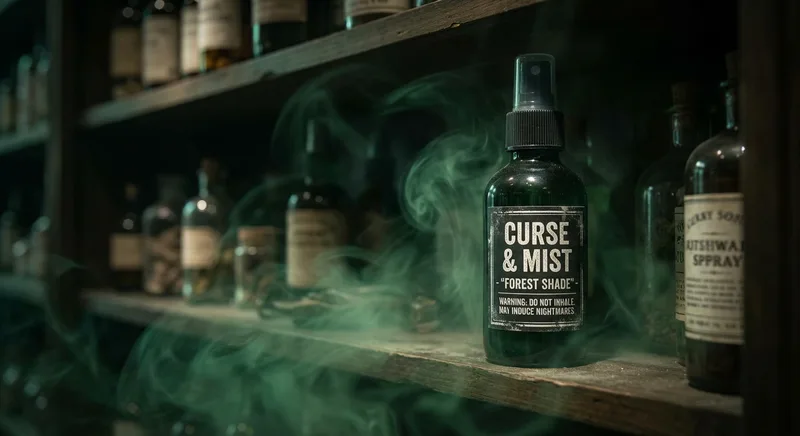
There is no version of this article that's entirely funny, because two people died — one of them a child. We're going to be honest about that upfront. But we're also going to be honest about the fact that a Walmart-branded aromatherapy product called "Better Homes & Gardens" contained a tropical bacterium that the CDC typically investigates in the context of bioterrorism preparedness, and that this particular irony is so staggering it deserves to be examined with the seriousness it was not given during quality control.
In October 2021, Walmart recalled approximately 3,900 bottles of Better Homes & Gardens Gem Room Spray in Lavender & Chamomile scent after the CDC confirmed the product contained Burkholderia pseudomallei — the bacterium that causes melioidosis, a disease primarily found in tropical soil in Southeast Asia and northern Australia. Melioidosis kills roughly 50% of people who develop septic infection. It is classified by the CDC as a Tier 1 Select Agent, the same category as anthrax and Ebola.
This bacterium was inside an aromatherapy spray. Sold at Walmart. In the candle aisle. For five dollars.
The Vision: Spray Some Lavender, Feel Some Calm
The Better Homes & Gardens brand is licensed by Walmart from Meredith Corporation (now Dotdash Meredith), the media company that publishes the magazine of the same name. The brand evokes cozy domesticity — throw pillows, herb gardens, Sunday casseroles. It is the aesthetic of a woman named Linda who has strong opinions about grout.
The Gem Room Spray line featured essential oil-based sprays in scents like Lavender & Chamomile, designed to make your home smell like a spa instead of whatever it actually smells like. The bottles had a gemstone aesthetic. The price was accessible. The promise was simple: make your home smell nice.
The promise did not include "expose your family to a pathogen that the United States government classifies alongside weapons of mass destruction," but here we are.
The Glorious User Experience
We're not doing fake reviews for this one. Two people died. A child died. Instead, here's what happened.
In the summer and fall of 2021, four people across four states were diagnosed with melioidosis — a disease so rare in the continental United States that any single case triggers a CDC investigation. Two of the four died, including a child in Georgia. The victims had no travel history to regions where melioidosis is endemic, which meant the bacteria had come to them.
The CDC, working with state health departments, conducted genomic sequencing of the bacterial samples from all four patients and found they were closely related — meaning the infections likely came from a common source. That source, after months of investigation, was identified as a bottle of Better Homes & Gardens Gem Room Spray in Lavender & Chamomile scent, found in the home of one of the victims.
The bottle tested positive for Burkholderia pseudomallei. Walmart recalled the product. The CDC issued a health alert. And somewhere in a conference room in Bentonville, Arkansas, someone had to explain to a room full of executives that the candle aisle had become a biosecurity incident.
“Melioidosis kills roughly 50% of people who develop septic infection”
Click to TweetThe Truth: How Does Bioterrorism Bacteria Get Into Walmart's Lavender Spray?
This is the question that makes the whole thing so deeply unsettling: how did a tropical pathogen end up in an aromatherapy spray sold at the largest retailer on Earth?
The CDC's investigation suggested the contamination occurred during manufacturing, likely through contaminated raw materials — possibly water or a plant-derived ingredient used in the spray. Burkholderia pseudomallei lives in soil and water in tropical regions. If any raw material in the spray's supply chain originated from or was processed in an endemic region, the bacterium could have hitched a ride.
The spray was made in India by a contract manufacturer. The ingredient supply chain, like most globalized supply chains, involved multiple countries, multiple intermediaries, and apparently insufficient testing to catch one of the most dangerous bacteria on the CDC's watch list.
Only the Lavender & Chamomile scent tested positive. Other scents in the same product line tested negative. This means the contamination was almost certainly tied to a specific ingredient batch — one batch, one scent, one shipment, two deaths. The precision of the tragedy is what makes it so terrifying. You could have bought a different scent from the same shelf on the same day and been fine. You could have reached left instead of right and not brought a bioterrorism agent home to your family.
Walmart pulled the product immediately and cooperated fully with the CDC investigation. The recall was limited to 3,900 bottles, a tiny number compared to most consumer recalls. But the severity was off the charts — this wasn't a product that might cause a rash or an upset stomach. This was a product that could kill you by existing in the same room.
The case prompted the CDC to add melioidosis to its list of nationally notifiable diseases and to expand environmental sampling in the continental U.S. It also prompted a lot of people to Google "melioidosis" for the first time and then spend the rest of the evening staring at their collection of Walmart air fresheners with newfound suspicion.
The Verdict
The Better Homes & Gardens Gem Room Spray is the most dangerous product in this entire database, measured by the gap between what it was and what it did. It was a five-dollar lavender spray. It killed a child. The distance between those two facts is the distance between a pleasant Wednesday evening and a CDC biohazard investigation, and that distance was crossed by a single bottle of aromatherapy purchased in the candle aisle at Walmart.
The name "Better Homes & Gardens" is doing a lot of heavy lifting in a sentence that ends with "contained a pathogen classified alongside anthrax." No amount of branding can survive that juxtaposition. No amount of lavender can cover that smell.
We rate it 1 out of 5 safe breaths.
If you want your home to smell nice without consulting the CDC, see our alternatives below.
---
✅What to Buy Instead
Vitruvi Stone Diffuser
Ceramic essential oil diffuser using ultrasonic mist. No aerosol sprays. No bacteria. Just steam and whatever oil you put in it, which you control.
Mrs. Meyer's Room Freshener
Plant-derived room spray from a brand with transparent ingredient sourcing. Made in the USA. Has never been investigated by the CDC.
Pura Smart Diffuser
App-controlled home fragrance with premium scent capsules from brands like Nest and Votivo. Ingredients listed. Supply chain audited. No bioterrorism.
Comments
Sign in or create an account to join the discussion.