
CheerKid Baby Bath Seats: Designed to Keep Babies Safe in Water, Tipped Babies INTO Water
A bath seat recalled for tipping over during use — the one thing a bath seat must not do, it did
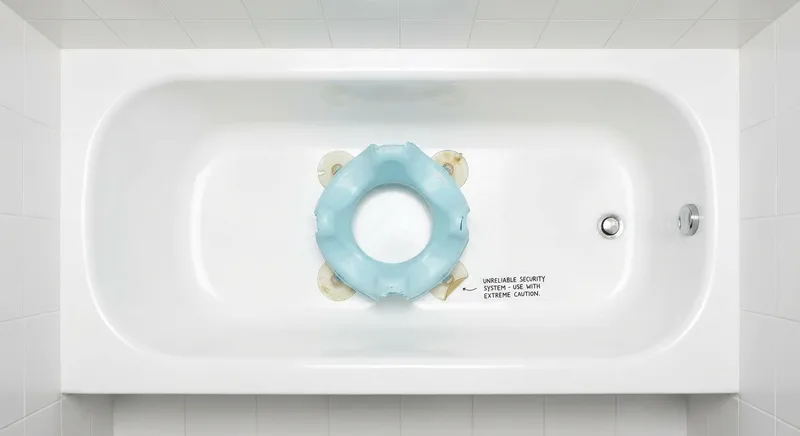
A baby bath seat has one job. One. Keep the baby upright in the bathtub. That's the product's entire purpose, its sole reason for existence, its complete value proposition. A baby bath seat that tips over in the bathtub has failed its one job in the one way that creates the one outcome parents were trying to prevent: a baby face-down in water.
CheerKid baby bath seats were recalled by the CPSC for tipping over during use, posing a drowning hazard. The product designed to prevent drowning created a drowning risk. The safety device was itself the hazard.
This is the baby product equivalent of a fire extinguisher that starts fires. A parachute that makes you fall faster. A life vest that pulls you under. The product's failure is the exact inverse of its purpose, which represents a special category of design failure that shouldn't be possible in a product category where the safety standard is "doesn't flip over."
Baby bath seats are not complex products. They're plastic frames with suction cups that attach to the bathtub floor and support the baby in a seated position. The engineering requirements are: stability, suction, and the structural integrity to not tip when a baby — a small, wiggly, unpredictable human — shifts weight or reaches for a toy. These are not ambitious engineering challenges. The product must not tip. The CheerKid tipped.
The Design Failure: When Suction Doesn't
The CPSC's recall notice identified that CheerKid bath seats violated federal safety standards — specifically, the stability requirements that govern infant bath seats under ASTM F1967. This standard exists because bath seat tip-overs are a known drowning hazard. The standard defines the forces the seat must withstand without tipping, the suction cup requirements, and the structural stability the seat must maintain during use.
CheerKid's seats did not meet these standards. The suction cups either didn't adhere strongly enough, the base wasn't wide enough, or the structural design didn't distribute the baby's weight in a way that maintained stability when the baby moved. Whatever the specific failure point, the result was a seat that could tip when the baby shifted — which babies do constantly, because they are babies and movement is the default state of all babies.
Bath seat drowning is devastatingly fast. A baby can drown in as little as one inch of water in under 60 seconds. A bath seat that tips creates an emergency with no margin for error. The time between "the seat tipped" and "the baby is submerged" is measured in seconds. The time a parent needs to react — even a parent standing right there — may not be enough if the tip is unexpected and the parent is reaching for soap or a towel.
This is why bath seat stability standards exist. This is why those standards are strict. And this is why a product that violates those standards and ships anyway is not a minor compliance issue — it is a product that puts infants in immediate, potentially fatal danger.
“A baby bath seat that tips over in the bathtub has failed its one job in the one way that creates the one outcome parents were trying to prevent: a baby face-down in water”
Click to TweetThe Broader Issue: Amazon and Uncertified Baby Products
CheerKid bath seats were sold primarily on Amazon, which is where a significant and growing percentage of baby products are purchased. Amazon's marketplace model allows third-party sellers — including manufacturers who may not have undergone the testing and certification required by U.S. safety standards — to list products alongside certified, compliant products from established brands.
For parents shopping on Amazon, a CheerKid bath seat sits in the same search results as a Summer Infant bath seat (ASTM-certified, extensively tested). The listings look similar. The prices are often lower for uncertified products. The reviews may be comparable (or manufactured). The difference — compliance with federal safety standards — is not visible in the product listing unless the parent knows to look for it.
The CPSC has repeatedly warned about non-compliant baby products sold through online marketplaces. The agency has increased surveillance and enforcement, but the volume of products listed on Amazon, combined with the speed at which new listings appear, creates an environment where dangerous products reach consumers before the CPSC can catch them.
The Verdict
The CheerKid baby bath seat is a product that failed its only job: keeping a baby upright in water. It violated the safety standards that exist specifically to prevent the exact failure it exhibited. It was sold on a marketplace where uncertified products sit alongside certified ones, and where parents have no easy way to distinguish between safe and unsafe without researching ASTM compliance for every item in their cart.
A baby bath seat that tips is not a flawed product. It is an anti-product — a device that creates the hazard it was purchased to prevent. It shouldn't exist. It did. It's been recalled. Check your bathroom.
If you need a baby bath seat, verify ASTM F1967 compliance. See our certified alternatives below.
---
✅What to Buy Instead
Summer Infant My Bath Seat
ASTM F1967 certified with strong suction cups and a wide, stable base. From an established brand with decades of baby product safety.
Skip Hop Moby Bath Kneeler
Takes a different approach — cushioned kneeler for the parent, with manual support for the baby. The safest bath method: your hands.
Blooming Bath Lotus
Plush flower insert for sink bathing that keeps baby cradled. For young infants, sink bathing with a soft insert is simpler and safer than a tub seat.
Comments
Sign in or create an account to join the discussion.