
Coca-Cola Blāk: The Coffee-Cola Hybrid with a Pretentious Accent Mark That Lasted 17 Months and Deserved Fewer
A drink that combined the bitterness of coffee with the sweetness of Coke, resulting in a beverage that tasted like both had lost an argument
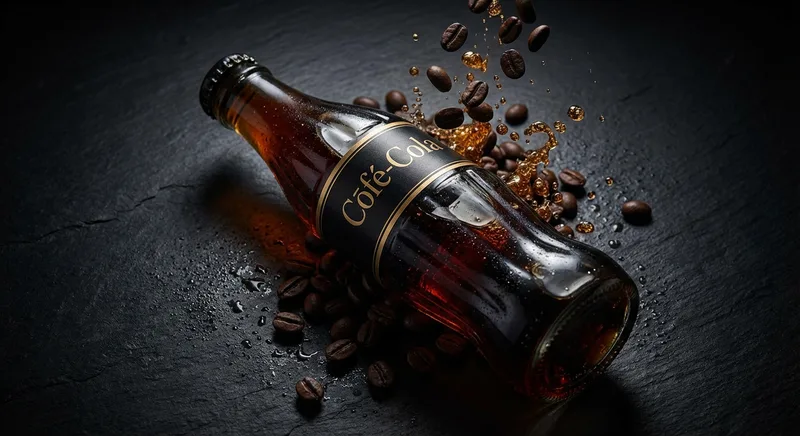
The accent mark tells you everything.
Not Blak. Not Black. Blāk. With a macron over the A. A diacritical mark. On a Coca-Cola product. The accent mark was there to communicate sophistication, European sensibility, and a premium positioning that justified selling eight ounces of coffee-cola for the price of a full-sized bottle of regular Coke.
The accent mark was the most successful part of the product. It was the only element that achieved its goal: it made you look at the bottle and think "this is trying very hard." The drink inside the bottle was also trying very hard, and also failing.
Coca-Cola Blāk launched in 2006 as a "carbonated fusion beverage" — Coca-Cola mixed with coffee essence, sold in slim 8-ounce glass bottles that looked like they belonged at a jazz bar in Paris and tasted like they belonged in the drain of a coffee shop in New Jersey. The drink combined Coke's sweetness with coffee's bitterness, producing a flavor that was too sweet for coffee drinkers, too bitter for Coke drinkers, and too confusing for anyone caught in between.
The product lasted 17 months. Coca-Cola discontinued it in 2008, making Blāk one of the shortest-lived products in Coke's history — shorter than New Coke's 79 days only because Blāk's death was slow and quiet where New Coke's was fast and loud. New Coke was a car crash. Blāk was a patient who stopped responding to treatment and was removed from life support when the cafeteria ran out of accent marks.
The Vision: What If Coke, but Make It Coffee, but Make It Fancy?
The coffee-cola concept isn't inherently terrible. Caffeine is already in both products. Sweetness and bitterness can balance. The combination of cola and coffee flavors is theoretically viable — Coca-Cola eventually proved this with Coca-Cola with Coffee, launched in 2021, which actually works.
What Blāk got wrong was everything around the concept: the execution, the positioning, the packaging, and the accent mark. The drink was positioned as a premium, sophisticated, adult beverage — a "mid-afternoon pick-me-up" for refined consumers. This positioning conflicted with the reality that the drink was a Coke product, sold in convenience stores, to people who were buying lottery tickets and beef jerky in the same transaction.
The 8-ounce bottle was a disaster. It contained fewer ounces than a standard Coke but cost the same or more. Consumers who wanted value got less liquid. Consumers who wanted premium got a convenience-store product with an accent mark. The bottle satisfied nobody.
The flavor profile combined coffee's natural bitterness with Coke's high-fructose corn syrup sweetness, creating a push-pull sensation that one reviewer described as "drinking coffee and Coke at the same time, which is something I could do at home by pouring both into the same glass, which I tried, and which confirmed that nobody should do this."
The Glorious User Experience
David from New York, NY — ★☆☆☆☆
"I bought Blāk because the accent mark intrigued me. I'm a man who can be sold a product with a diacritical mark. This is my weakness. I opened the slim, sophisticated bottle. I took a sip. My tongue received two contradictory signals simultaneously: 'SWEET' and 'BITTER.' My tongue filed a grievance. The flavor was not a fusion. It was a collision. Two beverages had crashed into each other and the wreckage was in my mouth. One star. The accent mark gets three stars."
Laura from Chicago, IL — ★☆☆☆☆
“The accent mark was the most successful part of the product”
Click to Tweet"Blāk tasted like someone dissolved a Werther's Original in a cup of diner coffee. Then carbonated it. Then put it in a tiny bottle that costs $2. Then added an accent mark to justify the $2. The drink tasted like regret with an umlaut. One star."
Steve from Los Angeles, CA — ★☆☆☆☆
"I'm a barista. I understand coffee. I understand flavor pairing. I understand that bitterness and sweetness can complement each other when balanced correctly. Blāk was not balanced correctly. Blāk was coffee and Coke having a custody battle over your taste buds, and both of them were losing. One star."
Mike from Portland, OR — ★☆☆☆☆
"The 8-ounce bottle was the real insult. You get LESS liquid for MORE money and the liquid is WORSE. This is the opposite of every value proposition in consumer history. Normally, paying more gets you more or better. Blāk charged more for less of a product that tasted like a compromise between two drinks that were better separate. This is negative value. This is the Juicero of beverages. One star."
The Truth: The Accent Mark Was More Memorable Than the Drink
Coca-Cola Blāk is remembered almost exclusively for its pretentiousness. The accent mark. The slim bottle. The "fusion beverage" descriptor. The mid-afternoon positioning. Everything about Blāk was trying to be something that a Coca-Cola product is not: exclusive, refined, and European.
Coca-Cola is the opposite of exclusive. It is the most democratic beverage on Earth — available in 200+ countries, sold at every price point, consumed by billionaires and bus drivers with equal frequency. Positioning a Coke product as premium is like dressing a golden retriever in a tuxedo: the outfit doesn't change the dog, and the dog seems confused by the attempt.
When Coca-Cola tried again with Coca-Cola with Coffee in 2021, they fixed every mistake Blāk made. Standard can size (not 8 ounces). Standard price (not premium). Actual flavor options (mocha, vanilla, caramel). No accent mark. No pretension. Just Coke with coffee, in a regular can, at a regular price. It worked. Because the concept was fine. The execution in 2006 was the problem. And the accent mark.
The Verdict
Coca-Cola Blāk was a coffee-cola in a tiny pretentious bottle with a diacritical mark that nobody asked for, a price that nobody wanted, and a flavor that nobody preferred over drinking coffee and Coke separately, which is free to do and requires no accent marks.
It lasted 17 months. It taught Coca-Cola that the coffee-cola concept has potential and that the accent mark does not. The company came back 15 years later, removed the pretension, and made it work. Blāk was the draft. Coca-Cola with Coffee was the final version. The accent mark was the track change that got deleted.
We rate it 1 out of 5 necessary diacritical marks.
If you want coffee and cola to coexist in your life, see our alternatives below.
---
✅What to Buy Instead
Coca-Cola with Coffee
Coke's second attempt — and it works. Mocha, vanilla, and caramel flavors. Standard can. No accent mark. The correct version of the incorrect original.
La Colombe Draft Latte
Premium canned cold-brew latte that satisfies the coffee craving without pretending to be soda. Knows what it is.
Drinking Coffee and Soda Separately
Enjoy them at different times of day. Coffee in the morning. Coke in the afternoon. This has worked for a century. No fusion required.
Comments
Sign in or create an account to join the discussion.