
Huda Beauty Neon Obsessions Palette: Eyeshadow That Shouldn't Go Near Eyes, Which Is the One Place Eyeshadow Is For
A $29 eyeshadow palette marketed for eyes that contained ingredients not safe for eyes — the beauty industry's most literal product contradiction
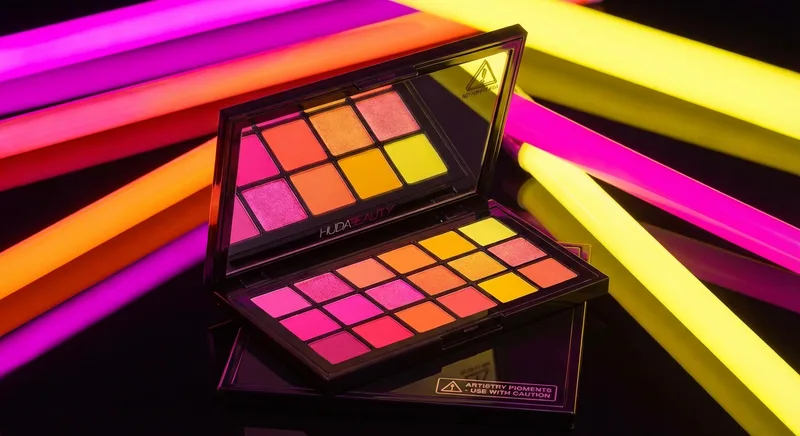
I want to establish the logical framework of this product's failure because it operates on a level of self-contradiction that borders on philosophical.
The product is eyeshadow. Eyeshadow is a cosmetic applied to eyelids. The word "eye" is in the name. The product's sole purpose — its entire reason for existing — is to be placed on or near the human eye. This is not an ambiguous use case. This is not a product with multiple applications. Eyeshadow goes on eyes. That's why it's called eyeshadow and not "arm pigment" or "elbow color."
The Huda Beauty Neon Obsessions Palette contained colorants that were not approved by the FDA for use in the eye area. The palette was marketed as eyeshadow. It was photographed on eyelids. It was demonstrated in tutorials on eyelids. It was sold in the eyeshadow section. And it contained ingredients that the FDA had specifically not approved for use near eyes.
Eyeshadow. Not for eyes. Sold as eyeshadow. Applied to eyes. Contains ingredients not safe for eyes.
This is the beauty industry's most perfect logical contradiction since "long-lasting lipstick" that comes off when you drink water, except this contradiction causes eye irritation, rashes, and pain instead of just ruining your coffee cup.
The Vision: Neon Colors for Instagram (Not for Actual Eyes)
The Huda Beauty Neon Obsessions Palette launched in 2019 as part of the neon makeup trend — electric pinks, greens, and oranges designed to pop on camera and dominate Instagram feeds. The palettes came in three neon variations and were priced at $29, positioning them as accessible luxury from a brand founded by beauty influencer Huda Kattan.
The problem: neon pigments are difficult to achieve with colorants approved for eye use. The FDA maintains a list of colorants approved for use in cosmetics, and within that list, a smaller subset is approved specifically for the eye area. Neon colors — the vivid, electric, UV-reactive shades that made the palette desirable — often require colorants from outside that approved subset.
The palette included a tiny disclaimer — "not intended for use in the immediate eye area" — which, for an eyeshadow palette, is the cosmetics equivalent of a swimming pool with a sign that says "not intended for swimming." The disclaimer existed. The marketing, the product photography, the influencer tutorials, and the product's fundamental identity as eyeshadow all contradicted it.
When consumers — who had purchased eyeshadow to use as eyeshadow — applied it to their eyes, some experienced irritation, redness, swelling, and pain. Because the product contained colorants not approved for eye use. Because the eyeshadow was not for eyes.
The Glorious User Experience
Ashley from Miami, FL — ★☆☆☆☆
"I bought the Neon Orange palette specifically for a festival look. I applied it to my eyelids because it is eyeshadow and that is where eyeshadow goes. Within two hours, my eyelids were swollen, red, and itching. I looked less 'festival chic' and more 'severe allergic reaction.' My friend drove me to an urgent care where the doctor asked what I'd put near my eyes. I said 'eyeshadow.' He said 'which one?' I showed him. He read the tiny disclaimer. He looked at me. I looked at him. We both agreed that marketing eyeshadow as not for eyes was a decision that someone should answer for. One star."
Jess from Seattle, WA — ★☆☆☆☆
"The disclaimer was printed in text so small that I needed the eyeshadow's neon brightness just to see it. 'Not intended for use in the immediate eye area.' NOT INTENDED. FOR USE. IN THE IMMEDIATE EYE AREA. On a product called EYESHADOW. In an EYESHADOW PALETTE. Displayed in the EYESHADOW section. With a model wearing it on her EYES on the packaging. One star."
“The product's sole purpose — its entire reason for existing — is to be placed on or near the human eye”
Click to TweetBrittany from Dallas, TX — ★☆☆☆☆
"I'm a makeup artist. A client requested the neon look for a photoshoot. I used the Huda Neon palette. Her eyes watered, reddened, and swelled within 30 minutes. I had to halt the shoot. I later discovered the disclaimer. I, a professional makeup artist, applied eyeshadow to a client's eyes without knowing the eyeshadow shouldn't go near eyes. Because who reads the fine print on eyeshadow to check if it's safe for eyes? That's like checking if water is safe for drinking. One star."
Taylor from Portland, OR — ★☆☆☆☆
"I bought all three Neon Obsessions palettes. $87 total. On eyeshadow that I cannot use as eyeshadow. I now own $87 worth of pigment that I can use on my cheeks, my arms, or as very expensive finger paint. The most expensive art supplies in my apartment are my forbidden eyeshadow palettes. One star."
The Truth: The $2.8 Million Disclaimer
In 2022, Huda Beauty agreed to a $2.8 million settlement over the Neon Obsessions palettes. The settlement addressed claims that the product was marketed as eyeshadow while containing colorants not approved for eye use, and that the disclaimer was insufficient to overcome the product's fundamental identity as an eye cosmetic.
The FDA's colorant regulations divide cosmetic colorants into three categories: those approved for general cosmetic use, those approved for external use only (not near mucous membranes), and those approved for use in the eye area. Neon pigments frequently fall into the first or second category but not the third, meaning they can legally be used in lipstick or blush but not in eyeshadow.
The Neon Obsessions palette occupied a regulatory gray zone: it could legally be sold as a "pressed pigment" (not specifically labeled for eye use), but it was marketed, displayed, and perceived as eyeshadow. The disclaimer created a legal fig leaf but didn't prevent the inevitable outcome of selling an eye-area product to people who would use it in the eye area.
This is not unique to Huda Beauty. Multiple beauty brands sell "pressed pigment" palettes with neon or non-eye-safe colors, relying on disclaimers to create legal distance between the product and its obvious use. The practice continues because the demand for vivid, Instagram-friendly eye looks exceeds what eye-safe colorants can currently provide.
The result is a category of products that exist in a state of cognitive dissonance: marketed as eyeshadow, displayed as eyeshadow, bought as eyeshadow, used as eyeshadow, and disclaimed as not eyeshadow. It's Schrödinger's makeup — simultaneously for eyes and not for eyes, until you open the palette and your eyelids swell shut.
The Verdict
The Huda Beauty Neon Obsessions Palette is eyeshadow that isn't safe for eyes, which is the most fundamental product failure possible in the eyeshadow category. It's a life jacket that isn't safe for water. A seatbelt that shouldn't be worn in a car. A smoke detector that shouldn't be placed near smoke.
The disclaimer existed. The marketing contradicted it. The consumers did what consumers do with eyeshadow: they put it on their eyes. And some of them paid for that entirely reasonable decision with swollen, irritated, painful eyelids, because the beauty industry decided that neon colors were worth more than eye safety, and that a tiny disclaimer could absolve them of the consequences.
We rate it 1 out of 5 eye-safe colorants.
If you want colorful eyeshadow that you can actually put on your eyes, see our alternatives below.
---
✅What to Buy Instead
Natasha Denona Mini Sunrise Palette
Premium colorful shadows specifically formulated for eye safety. Vivid colors that are actually approved for the area they're designed for.
ColourPop Pressed Powder Palette
Affordable, pigmented, eye-safe palettes. Bold colors without bold disclaimers. Under $15 for a palette you can use as intended.
Comments
Sign in or create an account to join the discussion.