
Hydroxycut: The Diet Pill That Kept Coming Back From the Dead Like a Supplement-Industry Horror Villain
Recalled after destroying livers in 2009, reformulated, and returned to shelves under the same name — because brand loyalty apparently extends to organ damage
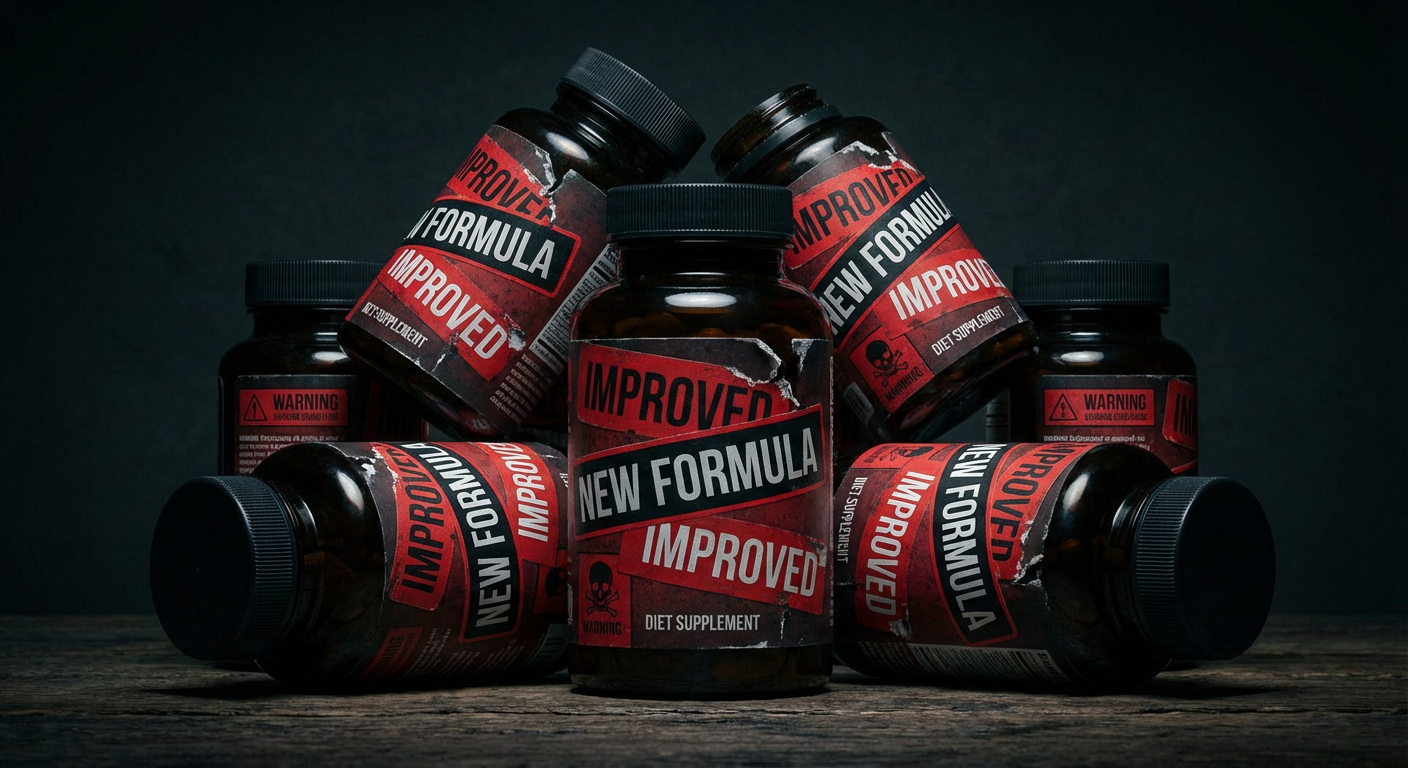
In May 2009, the FDA issued a rare consumer warning about Hydroxycut — a weight loss supplement so popular it was practically a food group in certain gym locker rooms. The FDA had received 23 reports of serious liver injuries, including one death and three liver transplants. Not "stomach discomfort." Not "mild nausea." Liver transplants. People took a diet pill and their livers failed so completely that they needed someone else's liver to survive.
The FDA asked the manufacturer to recall the product. The manufacturer complied. Products were pulled from shelves. The story should end here. A supplement destroyed organs. It was recalled. It should have been buried in a regulatory grave with a headstone that reads "Here Lies Hydroxycut: It Helped You Lose Weight by Destroying the Organ That Processes Weight Loss."
But Hydroxycut didn't stay dead. It was reformulated — new ingredients, same name, same shelf space, same target audience — and returned to stores like a horror movie villain that survives the explosion at the end of act three and shows up in the sequel wearing a slightly different outfit. The brand that killed a person and hospitalized dozens re-entered the market under the same name, banking on the calculation that consumer memory is shorter than a supplement cycle.
They were right. Hydroxycut is still sold today. In GNC stores. On Amazon. At Walmart. The name that should be synonymous with "liver failure" is instead synonymous with "weight loss," because the supplement industry operates in a regulatory twilight zone where you can destroy organs, get recalled, change the formula, and relaunch without changing the name that was on the bottle when people's livers shut down.
The Vision: Weight Loss in a Capsule (Side Effects May Include Death)
Hydroxycut first appeared in 2002, originally containing ephedra — a stimulant that the FDA banned in 2004 after it was linked to heart attacks, strokes, and deaths. So Hydroxycut's first formula contained an ingredient that was later banned for killing people. The company reformulated after the ephedra ban, replacing it with other ingredients, and continued selling.
The post-ephedra Hydroxycut contained hydroxycitric acid (from Garcinia cambogia), caffeine, and various herbal extracts. It was this version that triggered the 2009 liver damage reports. The specific ingredient or interaction responsible was never conclusively identified, which is its own kind of terrifying — they knew the product was destroying livers but couldn't pinpoint which ingredient was doing it.
After the recall, Hydroxycut was reformulated again — different ingredients, same brand, same promises. The current version contains caffeine, various plant extracts, and vitamins. It is marketed as a "scientifically researched" weight loss supplement, which is technically true in the way that the Titanic was a "scientifically engineered" ocean vessel. Science was involved. The outcome was suboptimal.
The Glorious User Experience
Marcus from Houston, TX — ★☆☆☆☆
"I took Hydroxycut in 2008. Six weeks in, my urine turned brown. Not 'slightly darker than usual.' Brown. The color of iced tea. I went to the ER. My liver enzymes were elevated to levels my doctor described as 'concerning,' which is what doctors say when they mean 'terrifying but I need you to stay calm while I order more tests.' I stopped taking Hydroxycut. My liver recovered over three months. The bottle cost $30. The ER visit cost $4,200. The most expensive piss I've ever taken. One star."
Danielle from Phoenix, AZ — ★☆☆☆☆
"I took the reformulated version — the one after the recall. The 'safe' version. I lost 3 pounds in a month, which is exactly what I would have lost by skipping dessert twice a week. The ingredient list reads like a botany textbook — every plant extract in the Southern Hemisphere pressed into a capsule and marketed as a miracle. It's not a miracle. It's caffeine with extra steps. For $30 a bottle, I could buy actual coffee and skip actual dessert and achieve the same results without gambling on which version of this product might decide to audit my organs."
Todd from Chicago, IL — ★☆☆☆☆
“People took a diet pill and their livers failed so completely that they needed someone else's liver to survive”
Click to Tweet"The thing that infuriates me is the name. They kept the name. After a recall. After a death. After liver transplants. They kept the name 'Hydroxycut' and put it back on shelves and expected people to trust it because the formula was different. Imagine if Ford recalled the Pinto for exploding, redesigned it, and released it again as 'The Ford Pinto — New Formula, Same Name!' Nobody would buy that car. But people buy Hydroxycut because supplement branding operates on different rules than car branding, and those rules are 'there aren't any.'"
Lisa from Tampa, FL — ★☆☆☆☆
"My trainer recommended it. My TRAINER. A certified personal trainer looked at me — a person who came to him for professional health guidance — and said, 'Try Hydroxycut.' I took it. My hands shook. My heart raced. I couldn't sleep. I stopped after two weeks. I switched trainers. One star for the product. Zero stars for the fitness professional who recommended a recalled supplement like it was a protein bar."
The Truth: The Supplement Industry's Get-Out-of-Jail-Free Card
Hydroxycut's ability to survive a recall and re-enter the market under the same name is not a bug in the system. It is the system. The Dietary Supplement Health and Education Act of 1994 (DSHEA) created a regulatory framework in which supplements are treated more like food than like drugs. Manufacturers don't need FDA approval before selling a supplement. They don't need to prove efficacy. They don't need to prove safety. The FDA can only act after a product has already caused harm — which, in the case of Hydroxycut, means after a person has died and three people have received new livers.
This is like a building code that says you can build whatever you want, however you want, with whatever materials you want, and the government will only get involved after the building collapses on someone. The building inspector shows up at the funeral.
The 2009 recall was prompted by 23 reports, but the actual number of adverse events was likely much higher. Most supplement side effects go unreported because consumers don't connect their symptoms to the capsule they took that morning. They blame the flu. They blame stress. They blame the sushi they had yesterday. They don't think "my liver is failing because of the diet pill I bought at GNC," because the diet pill at GNC has a picture of a fit person on the label and the word "clinically studied" in bold font.
Hydroxycut has been reformulated multiple times since the recall. Each reformulation is technically a different product. Each reformulation uses the brand equity of a name that was on bottles that destroyed organs. The name is the asset. The name sells. The name survived a recall, a death, and three liver transplants, and it continues to sit on supplement shelves next to protein powder and creatine as if its history is a footnote and not a warning.
The Verdict
Hydroxycut is the cockroach of the supplement industry — unkillable, adaptable, and persistently present no matter how many times you think it's been eliminated. It contained ephedra until ephedra was banned. It contained whatever caused liver failure until liver failure prompted a recall. It now contains whatever the current formula is, which will presumably remain on shelves until whatever the current formula does prompts the next regulatory action.
The supplement that killed a person and transplanted three livers is available right now at your nearest GNC. It costs $30. The bottle has a new formula and the same name. The name that was on the bottle when people's organs failed is the same name on the bottle today. This is legal. This is the supplement industry. Welcome.
We rate it 1 out of 5 functioning livers.
If you want to support your fitness goals without gambling with your organs, see our alternatives below.
---
✅What to Buy Instead
Creatine Monohydrate
The only supplement with decades of peer-reviewed research proving it actually works. Safe, cheap, effective. Has never caused a liver transplant.
Caffeine + L-Theanine
Simple, well-studied energy stack for workouts. Caffeine for energy, theanine for focus without jitters. Two ingredients. Both understood. Neither recalled.
Proper Diet + Exercise
The unsexy answer that actually works. Consult a registered dietitian instead of a supplement label. No reformulations required.
Comments
Sign in or create an account to join the discussion.