
Life Savers Soda: The Product That Proved People Can Distinguish Between 'I Like This Candy' and 'I Want to Drink This Candy'
Focus groups loved the taste. Nobody bought it on shelves. Because wanting candy and wanting candy-flavored soda are two different desires that marketing couldn't merge.
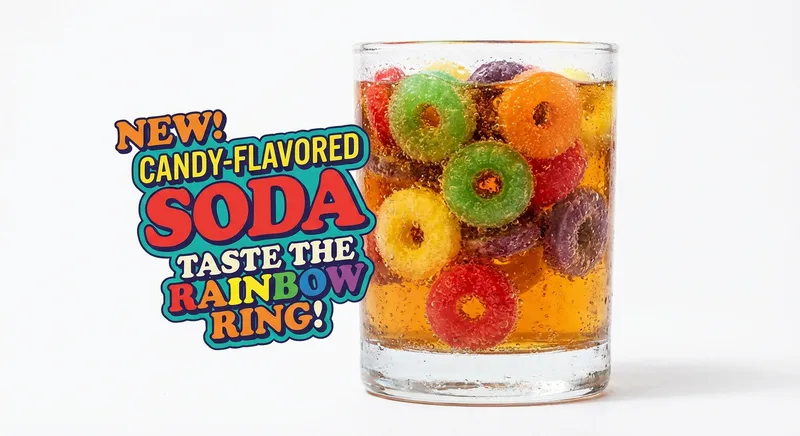
Life Savers Soda might be the most confusing product failure in food and beverage history, because by every measurable pre-launch metric, it should have succeeded. Focus groups loved it. Taste tests scored it highly. Brand recognition was through the roof — Life Savers was one of the most beloved candy brands in America. The flavors (cherry, grape, orange, lime, pineapple) mapped directly to existing soda flavors that consumers already purchased from other brands. On paper, Life Savers Soda was a guaranteed hit.
On shelves, it was a guaranteed miss.
The product launched in the late 1980s and failed so quickly and so completely that it became a case study in the difference between what consumers say they'll buy and what consumers actually buy — a gap that marketing academics call the "intention-action gap" and that the rest of us call "people lie in focus groups."
Except in this case, people didn't lie. They genuinely liked the taste. They genuinely liked the brand. They genuinely intended to buy it. And then they stood in a grocery store aisle, looked at a bottle of Life Savers Soda next to a bottle of Crush or Fanta, and something in their brain said: "No. Life Savers is candy. I don't want to drink candy. I want to eat candy and drink soda. Separately. These are different activities."
Life Savers Soda failed because the human brain maintains a categorical separation between "candy" and "beverage" that no amount of focus group enthusiasm could override at the point of purchase. You can like a candy. You can like a soda. You can like a candy-flavored soda from a soda brand. You cannot like a candy-flavored soda from a candy brand, because the candy brand triggers "candy" in your brain, and candy is a solid you chew, and soda is a liquid you drink, and these categories do not mix at the cash register.
The Vision: Candy Brand + Soda = ???
The math seemed simple. Life Savers was one of the most recognized candy brands in America. Fruit-flavored sodas were a multi-billion-dollar category. Life Savers' flavors — Five Flavor rolls with cherry, grape, orange, lime, and pineapple — mapped perfectly to the fruit soda spectrum. The brand was already associated with the exact flavor profiles that consumers purchased in soda form from competitors.
The assumption was that brand affection would transfer between categories. People love Life Savers. People love soda. People would love Life Savers soda. This is the transitive property of branding, and it sounds logical until you test it against reality, where it fails.
The failure point is the grocery aisle. In a focus group, you're tasting a soda. The brand is a bonus — "Oh, this tastes good AND it's Life Savers? Great!" In a grocery aisle, you're making a purchase decision among dozens of options. The brand is a signal — and Life Savers signals "candy," which signals "this is a sweet treat for children" not "this is a beverage I'm buying for my family's dinner."
Crush signals soda. Fanta signals soda. Sprite signals soda. Life Savers signals candy. At the moment of purchase, the signal matters more than the taste. Nobody knows what Life Savers Soda tastes like from looking at the bottle. What they know is that Life Savers is candy, and they're not in the candy aisle, they're in the beverage aisle, and the candy brand feels wrong here.
The Glorious User Experience
The Focus Group, 1988 — ★★★★★
"This is delicious! It tastes exactly like a Life Saver but as a drink! I would definitely buy this! I'm going to tell all my friends! This is going to be huge!"
The Same People at the Grocery Store, 1988 — walks past Life Savers Soda, buys Crush
Marketing Researcher, 1989 — ★☆☆☆☆
"The focus group said they'd buy it. The focus group lied. Not intentionally — they genuinely believed they'd buy it when they said it. But saying 'I'd buy this' in a focus group and actually buying it in a store are separated by a psychological chasm that our research did not measure. The chasm is: in a focus group, you're tasting a drink. In a store, you're buying a brand. And Life Savers is not a drink brand. One star for the soda. Five stars for the lesson."
“The flavors (cherry, grape, orange, lime, pineapple) mapped directly to existing soda flavors that consumers already purchased from other brands”
Click to TweetGreg from Cleveland, OH — ★☆☆☆☆
"I actually bought Life Savers Soda. Once. It tasted fine. Like a decent fruit soda. There was nothing wrong with the product. There was something wrong with the experience of buying it — I felt, irrationally but genuinely, like I was buying liquefied candy in a soda bottle, and the thought made the soda taste sweeter than it probably was. My brain decided it was candy water before my tongue could overrule. The brand infected the experience. One star."
Professor of Marketing, Any Business School — ★☆☆☆☆
"Life Savers Soda is the cleanest example of category incongruence in beverage history. The product was objectively good. The brand was objectively strong. The combination was objectively wrong. This is what we teach on Day 1 of brand extension: some brands live in boxes, and the box is their power and their prison. Life Savers' box is 'candy.' The soda tried to leave the box. The consumer pushed it back in. One star for the product. Five stars for the textbook chapter."
The Truth: The Focus Group Paradox
Life Savers Soda is the most cited example of the focus group paradox — the phenomenon where consumer research produces enthusiastic positive signals that don't translate to purchase behavior. Focus groups measure liking. They don't measure buying. These are different behaviors.
In a focus group, you're tasting a free sample in a controlled environment where the only variable is the product. You're asked "do you like it?" and you answer based on the taste. You say yes because it tastes good.
In a store, you're choosing between 30 beverage options, each with a price, a brand, a position on the shelf, and a mental association. You're not asked "do you like it?" You're asked, implicitly, "will you pick this up instead of Crush?" And the answer, for Life Savers Soda, was: no. Not because it tasted worse. Because it felt wrong. Because Life Savers is candy and you're buying a drink and your brain can't reconcile the two.
The lesson changed how consumer products companies approach brand extensions. Post-Life Savers Soda, the industry developed more sophisticated testing methods — including simulated shopping environments, purchase-intent scaling, and concept testing in realistic retail contexts — specifically to prevent the focus-group-to-shelf disconnect that killed what should have been a successful product.
The Verdict
Life Savers Soda tasted good, tested great, and sold nothing — because the human brain refuses to drink candy, even when the candy tastes like a drink. The focus group said yes. The grocery aisle said no. The gap between the two is the most important lesson in beverage marketing, and it cost Life Savers a product line to teach it.
The candy works as candy. The soda works as soda. Together, they work as a business school case study and nothing else.
We rate it 1 out of 5 purchased bottles.
If you want fruit-flavored soda from a soda brand — the combination that works — see our alternatives below.
---
✅ What to Buy Instead
Zevia Zero Calorie Soda** | Naturally sweetened with stevia in classic flavors. From a soda brand. In the soda aisle. Everything in the right category. | View on Amazon | | ✅ | Life Savers Candy | Just eat the candy. It works as candy. It has worked as candy since 1912. Leave it in the candy aisle where it is happy and successful and not trying to be a drink. | View on Amazon |
✅What to Buy Instead
Spindrift Sparkling Water
Fruit-flavored sparkling water made with real squeezed fruit. From a water brand. In the water aisle. Where it belongs.
What to Buy Instead
Tried-and-tested alternatives that actually deliver on their promises. We may earn a small commission on purchases.
Comments
Sign in or create an account to join the discussion.