
The Lily Camera Drone: The Selfie Drone That Faked Its Own Demo Video
How a startup raised $34 million in pre-orders for a drone that was actually a GoPro strapped to someone else's drone
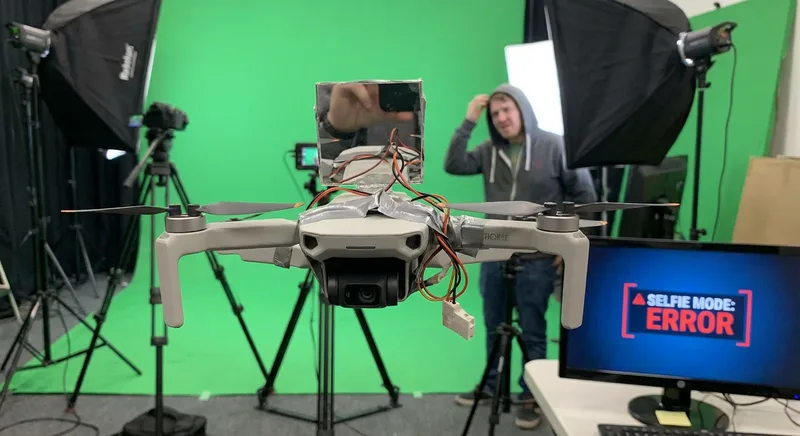
In 2015, a startup called Lily Robotics released a product video so compelling that it became the drone industry's equivalent of a Hollywood trailer. A man throws a small white drone into the air. It hovers. It follows him as he kayaks, snowboards, runs through fields. The footage is gorgeous — stabilized, cinematic, effortlessly tracking its subject through terrain that would challenge a professional camera operator.
The video went viral. Thirty-four million dollars in pre-orders flooded in from people who watched a man throw a drone in the air and thought, "I would like to throw a drone in the air."
One problem: the footage in the demo video wasn't shot by the Lily drone. It was shot by a GoPro mounted on a completely different, much larger drone. The Lily drone — the product people were actually paying for — didn't exist in a form capable of producing that footage. The beautiful video was a lie. The stunning tracking shots were a lie. The silky stabilization was a lie. The only honest part of the video was the man throwing something in the air, because throwing things is easy. Making them fly is the hard part.
Lily Robotics declared bankruptcy in January 2017 without shipping a single unit to customers. The San Francisco District Attorney sued for false advertising. The company settled for $375,000 in refunds — approximately one penny on the dollar for the $34 million in pre-orders.
The Vision: Throw It and Forget It
The Lily pitch was the pinnacle of millennial-targeted drone marketing: a "throw and shoot" camera that required zero skill, zero piloting experience, and zero thought. You literally threw it in the air and it did the rest. It would follow you using a GPS tracking device worn on your wrist. It was waterproof. It was autonomous. It was, in the company's words, "the world's first throw-and-shoot camera."
The founders, Antoine Balaresque and Henry Bradlow, were graduates of UC Berkeley's robotics program. They had credentials. They had a working prototype — of sorts. They had a vision of a drone so simple that anyone could use it, which is a noble goal that unfortunately requires the drone to function, a requirement they were less focused on.
Pre-orders opened at $499 for early birds, eventually rising to $899. The website promised delivery in February 2016. February 2016 arrived. The drone did not.
The Glorious User Experience
Jess from Boulder, CO — ★☆☆☆☆
"I pre-ordered a Lily in May 2015 because the video showed it following a snowboarder through fresh powder and I am, above all things, a person susceptible to well-produced marketing. I received exactly twelve monthly 'we're almost there!' emails, zero drones, and eventually, a bankruptcy notice. My $499 is gone. The snowboarder from the video is fine. He was being filmed by a different drone the entire time. I am not fine."
Alex from San Francisco, CA — ★☆☆☆☆
"I went to a Lily demo event in San Francisco. They showed the video on a big screen. Everyone clapped. Nobody asked to see the drone actually fly, because the video was so convincing that asking seemed rude, like asking a magician to explain the trick. In retrospect, asking would have been extremely appropriate, because the trick was that there was no drone."
Raj from Austin, TX — ★☆☆☆☆
"What gets me is that the San Francisco DA proved the video was filmed with a different camera on a different drone. They didn't even bother to fake it with their own prototype doing a mediocre job. They went full Hollywood and used professional equipment and a professional drone and professional editing and then said, 'This is what our $499 consumer product does.' That's not exaggeration. That's fiction. I could sell you a video of my Honda Civic doing 200 mph if I filmed a Lamborghini and called it a Civic."
“It follows him as he kayaks, snowboards, runs through fields”
Click to TweetHannah from Portland, OR — ★☆☆☆☆
"After the bankruptcy, I got a partial refund through the class action. I think it was around $30. I had paid $499 two years earlier for a drone that would follow me on adventures. Instead, I received $30 and a lifetime of cynicism about product videos. The ratio of money spent to adventure documented is infinity to zero. One star."
The Truth: The Most Expensive Product Video Ever Made
The San Francisco District Attorney's complaint laid out the fraud with prosecutorial clarity: Lily Robotics' promotional video "purported to show a drone taking footage of users during various outdoor activities, but the footage was not taken by a Lily Camera prototype." The footage was taken by a GoPro mounted on a DJI drone — a competitor's product that cost a fraction of what Lily was charging and, crucially, actually existed.
This is the consumer electronics equivalent of a restaurant photographing meals from the Michelin-starred place down the street and putting them on their own menu. It's not creative marketing. It's fraud. The DA agreed.
Lily raised $34 million in pre-orders — not Kickstarter money, direct pre-orders through their website, which meant people expected they were buying a product, not funding a dream. The company had 60,000 orders from customers in over 100 countries. Delivery was promised for February 2016, then pushed to summer 2016, then pushed to winter 2016, and then replaced with a bankruptcy filing in January 2017.
The company spent the $34 million on... what? Engineering salaries. Office space in San Francisco — not cheap. Marketing — clearly, since the video was their most successful product. By the end, there was no viable product, no manufacturing pipeline, and no path to delivering sixty thousand drones to sixty thousand increasingly anxious customers.
The bankruptcy estate refunded some customers, and the DA settlement added $375,000 in restitution, which, divided among sixty thousand pre-order customers, amounts to approximately $6.25 each. For a $499 product. The math of failure.
The Lily brand was later purchased by Mota Group, which released a product called the "Lily Next-Gen" that had no connection to the original engineering team and was, by most accounts, a generic Chinese drone with the Lily name slapped on it. The zombie brand shuffle: when your product fails so hard that someone buys the corpse and reanimates it as something cheaper.
The Verdict
The Lily Camera Drone is the most photogenic fraud in consumer electronics history. Its demo video remains, to this day, a beautifully shot piece of fiction — a short film about a product that didn't exist, funded by people who wanted it to exist so badly that they paid $499 for the privilege of believing.
The lesson is as old as advertising itself: if the demo video looks too good to be true, ask what camera filmed it. If the answer is "a competitor's camera on a competitor's drone," you are not watching a product demo. You are watching a movie.
We rate it 1 out of 5 honest advertisements.
If you want a drone that actually follows you and actually takes footage and actually exists, see our alternatives below.
---
✅What to Buy Instead
DJI Mini 4 Pro
Actual autonomous follow-me mode that works. 4K video. Fits in your palm. Filmed its own demo video, presumably.
Skydio X10
The best autonomous tracking technology on the market — genuinely follows you through obstacles using AI, not a GoPro on a different drone.
Insta360 X4
360° action camera on a selfie stick for the "invisible drone" look without a drone. Waterproof, 8K, and doesn't require throwing.
Comments
Sign in or create an account to join the discussion.