
The Microsoft Zune: The Music Player That Bricked Itself on New Year's Eve Because It Couldn't Handle a Leap Year
How Microsoft's iPod killer killed nothing except its owners' patience and every 30GB unit on December 31, 2008
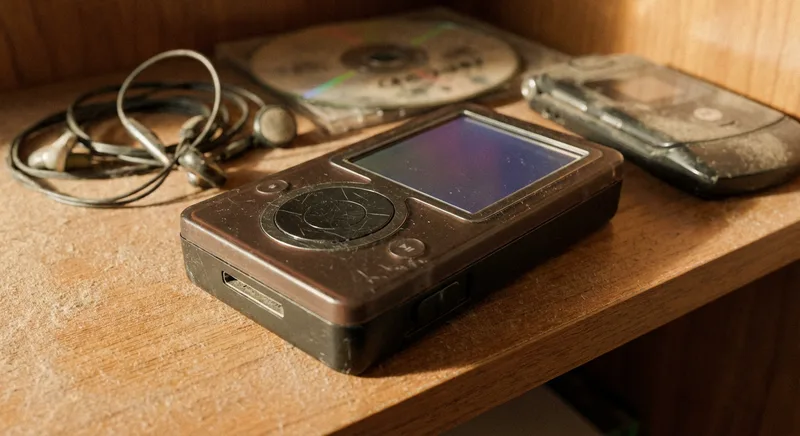
On November 14, 2006, Microsoft launched the Zune, a portable media player designed to compete with Apple's iPod. It came in brown. Not "espresso." Not "sienna." Not "burnished copper." Brown. The color of a UPS truck, a cardboard box, and the feeling you get when you realize you've just spent $249.99 on a device whose primary competitor is so dominant that its name is literally synonymous with the product category.
The iPod was not just a music player. It was a cultural object. The white earbuds were a status symbol. The click wheel was iconic. The iTunes ecosystem was a walled garden that people not only tolerated but actively enjoyed living inside. Microsoft looked at this and said, "We can do this too. But brown. And with a feature that lets you share songs wirelessly, except the shared songs self-destruct after three days or three plays, whichever comes first."
Three days. Three plays. This was Microsoft's definition of "sharing." It was less sharing and more lending, with an automatic repossession clause that made the entire feature feel like it was designed by a record label's attorney rather than someone who has ever had a friend.
The Zune never achieved more than single-digit market share against the iPod. But its true moment of glory came on December 31, 2008, when every single 30GB Zune on Earth simultaneously froze. All of them. At the same time. Because the device's internal clock couldn't process the 366th day of a leap year.
The Vision: What If the iPod, but Microsoft?
The Zune was Microsoft's attempt to apply its "fast follower" strategy — the approach that gave us Windows after Mac, Internet Explorer after Netscape, and Xbox after PlayStation — to the MP3 player market. The formula was simple: take what the market leader does, add a few differentiating features, leverage Microsoft's distribution power, and win through attrition.
The Zune had a larger screen than the iPod. It had an FM radio. It had Wi-Fi for wireless song sharing (with the aforementioned three-day/three-play limitation that made the feature functionally useless). It had a subscription music service, Zune Pass, that let you stream unlimited music for $14.99/month — a concept that was genuinely ahead of its time and would later become the basis for the entire music streaming industry.
The hardware was competent. The software was adequate. The design was... brown.
Microsoft reportedly researched what color would most distinguish the Zune from the iPod's iconic white. They landed on brown. In a product category defined by sleek minimalism and aspirational design, Microsoft chose the color most associated with mud, aging bananas, and sensible shoes. The marketing team positioned it as "bold" and "authentic." Consumers positioned it in their desk drawers.
The Glorious User Experience
Ryan from Seattle, WA — ★★★☆☆
"I'm going to defend the Zune and nobody can stop me. The Zune HD was genuinely a beautiful device. The OLED screen was gorgeous. The interface was ahead of its time — the Metro UI that eventually became Windows Phone started on the Zune. The music quality was excellent. Zune Pass was Spotify before Spotify existed. The problem was that none of this mattered because the iPod had already won and the brown one had already been mocked into oblivion. Three stars because the product was better than its reputation. Two stars deducted because it bricked itself on New Year's Eve."
Jessica from Portland, OR — ★★☆☆☆
"I received a Zune for Christmas 2006. The color was brown. My iPod was white. My friends' iPods were white. I was the brown device in a sea of white devices. The social dynamics of this cannot be overstated. Nobody wanted to see your Zune. Nobody wanted you to share a song via the Zune's wireless feature, because they'd have to accept it on their Zune, and admitting you owned a Zune was not something people did casually in 2006. Two stars because it did play music perfectly well when nobody was looking."
Mark from Denver, CO — ★☆☆☆☆
“99 on a device whose primary competitor is so dominant that its name is literally synonymous with the product category”
Click to Tweet"December 31, 2008. New Year's Eve. My Zune 30GB froze during pre-game festivities. I tried restarting. Frozen. Hard reset. Frozen. Connected to computer. Frozen. My Zune was a $250 brown brick. I went to a New Year's Eve party and told people my Zune had died. Nobody knew what a Zune was. I had to explain the device, explain that it was like an iPod, explain why I'd bought one instead of an iPod, and then explain that it had frozen because of a leap year. This was the worst New Year's Eve conversation of my life, and I once had to explain a pyramid scheme to my in-laws. One star."
Alex from Austin, TX — ★★☆☆☆
"The three-day/three-play sharing limit was the most Microsoft thing Microsoft has ever done. The entire appeal of wireless sharing was spontaneity — you hear a song at a party, someone beams it to your Zune, you discover new music. Instead, Microsoft made it feel like borrowing a library book. The song appeared on your device with a countdown timer, like a musical time bomb. 'ENJOY THIS SONG FOR 72 HOURS BEFORE IT SELF-DESTRUCTS.' The feature designed to make music social made music feel like a rental agreement. Two stars because I respected the attempt."
The Truth: The Leap Year That Killed New Year's Eve
On December 31, 2008, every Zune 30GB model in existence froze simultaneously. Not some. Not most. Every single one. The Zune 30 used a Freescale processor whose internal clock driver contained a bug: when it tried to process the 366th day of a leap year, it entered an infinite loop and froze. The device was unresponsive to any input. It could not be reset. It could not be connected to a computer. It sat in its owner's hand, brown and silent, a $250 monument to the fact that someone at Microsoft had not accounted for February 29th.
The fix was to wait. Literally. Microsoft told Zune 30 owners to let the battery drain completely, then recharge the device after midnight on January 1st, when the calendar would roll over to a non-leap year and the bug would resolve itself. "Wait until tomorrow" was the official technical support for a frozen consumer electronics device on the busiest party night of the year.
The incident was dubbed the "Zune Bug" and became the most memorable thing the Zune ever did — which, for a product whose entire purpose was playing music, is a catastrophic legacy. The Zune is remembered not for any song it played but for the day it stopped playing songs because it couldn't count to 366.
Microsoft continued selling Zunes through 2011, releasing the genuinely excellent Zune HD with an OLED screen and a touch interface that was ahead of its time. But the market had moved on. The iPhone had launched in 2007, combining phone, music player, and internet browser in one device. The Zune, no matter how good, was a dedicated music player in a world that no longer wanted dedicated music players.
The Zune software was folded into Xbox Music, which was folded into Groove Music, which was folded into nothing. Microsoft eventually partnered with Spotify, effectively admitting that if you want to listen to music on a Microsoft device, you should use someone else's service. The Zune is survived by its UI design, which evolved into the Metro interface used in Windows Phone, Windows 8, and Xbox — products that, notably, also struggled against their Apple and Google competitors.
The Verdict
The Zune was not a bad product. This is the tragedy. The hardware was solid. The Zune HD was beautiful. Zune Pass was visionary. The problem was that the Zune entered a market that the iPod had already won so decisively that second place was functionally irrelevant.
It launched in brown. Its signature feature self-destructed your shared songs. It bricked itself on New Year's Eve. Any one of these would be a footnote. Together, they form the complete biography of a product that did everything adequately and nothing memorably, except die in the most memorable way possible.
The Zune's epitaph should read: "It was actually pretty good, but nobody noticed because it was brown and it froze on New Year's Eve."
We rate it 2 out of 5 brown rectangles. One star for the hardware. One star for Zune Pass. Zero stars for the leap year bug, the color brown, and the three-day sharing limit.
If you want to listen to music without worrying about leap years or color theory, see our alternatives below.
---
✅What to Buy Instead
Apple AirPods Max (USB-C)
Premium over-ear headphones with spatial audio and seamless ecosystem integration. No leap year bugs. Available in colors other than brown.
Spotify Premium
100M+ songs streaming anywhere — the service that made dedicated music players obsolete. Songs don't self-destruct after three plays.
Sony WH-1000XM5
Best noise-cancelling headphones with 30-hour battery and multipoint Bluetooth. Works every day of every year, including leap years.
Comments
Sign in or create an account to join the discussion.