
New Coke: The Company That Spent Millions of Dollars to Discover That People Who Like Coke Want Coke
Changed a 99-year-old formula to taste more like Pepsi, discovered that Pepsi drinkers still wanted Pepsi and Coke drinkers wanted their Coke back — lasted 79 days
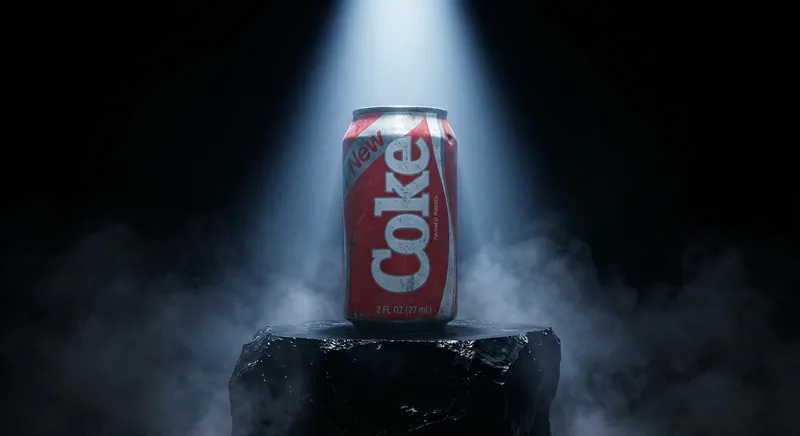
On April 23, 1985, Coca-Cola held a press conference to announce that they were changing the formula of the most popular soft drink in the history of civilization. The formula that had been the same since 1886. The formula that was stored in a vault. The formula that was reportedly known by only two people at any given time. The formula that had built a $70 billion company, sponsored every major sporting event on Earth, and was available in more countries than the United Nations has members.
They changed it.
They changed it because Pepsi was winning blind taste tests — the "Pepsi Challenge" — and Coca-Cola's market share was declining. The solution, in the boardroom's estimation, was to make Coke taste more like Pepsi. Because the people choosing Pepsi in blind tests obviously wanted a Pepsi-flavored Coke, not just Pepsi, which was already available everywhere and cost the same amount.
The new formula was sweeter. Smoother. More Pepsi-like. In blind taste tests, people preferred it over old Coke and over Pepsi. The data was clear. The logic was airtight. The disaster was 79 days away.
New Coke launched. America rioted. Not metaphorically. People hoarded old Coke. A man in San Antonio bought $1,000 worth of old Coke — the beverage equivalent of doomsday prepping. People called Coca-Cola's consumer hotline at a rate of 1,500 calls per day, most of them furious. Some of them crying. A man in Seattle filed a class-action lawsuit. A psychiatrist hired to monitor the calls compared some to conversations about the death of a family member.
People mourned a soft drink recipe like a relative. Because Coca-Cola had misunderstood something fundamental: people didn't drink Coke because of how it tasted in a blind test. They drank Coke because it was Coke. The taste was part of it. The identity was all of it.
Seventy-nine days later, on July 11, 1985, Coca-Cola held another press conference. They were bringing back the original formula. They called it "Coca-Cola Classic." The company's president said: "We have heard you." The senator from Georgia called it "a meaningful moment in U.S. history." ABC News interrupted General Hospital to announce it. A soft drink formula's return was treated as breaking news that preempted a soap opera.
New Coke lasted 79 days. The original formula has lasted 139 years and counting.
The Vision: Win the Pepsi Challenge (Lose Everything Else)
The Pepsi Challenge was brilliant marketing. Pepsi set up tables in malls and asked people to taste two colas in unmarked cups. Most chose Pepsi. Coca-Cola, watching its market share erode, decided the problem was the formula — not the marketing, not the distribution, not the price, not any of the hundred other variables that determine market share. The formula.
So they changed it. Two hundred thousand blind taste tests confirmed the new formula was preferred. This was the most extensively tested product reformulation in food history. The data was overwhelming. And it was completely, spectacularly wrong.
The tests measured taste preference in a vacuum — a single sip of an unmarked cola. They did not measure brand loyalty, emotional attachment, cultural identity, childhood nostalgia, or the experience of opening a Coke on a hot day knowing exactly what it would taste like because it had tasted that way your entire life. The tests measured a sip. People drink Coke by the lifetime.
Malcolm Gladwell has written about the "Pepsi Paradox" — the phenomenon where sweeter drinks win sip tests but less-sweet drinks win preference over full servings. Pepsi is sweeter than Coke. In a sip, sweeter wins. Over a full can, sweeter becomes cloying and less sweet becomes refreshing. The blind tests that justified New Coke were measuring the wrong unit of consumption. They tested sips and made a decision for cans. They tested a moment and changed a century.
The Glorious User Experience
The American Public, April-July 1985 — ★☆☆☆☆
"We didn't ask for this. Nobody asked for this. Nobody was writing letters to Coca-Cola saying 'please change the thing I've been drinking since childhood.' The company looked at blind taste tests and decided we wanted something different. We didn't want something different. We wanted Coke. The thing we'd been buying was Coke. We knew what it tasted like. We LIKED what it tasted like. Coca-Cola's response to our loyalty was to punish us with a new recipe we didn't request. One star."
Gay Mullins, Founder of 'Old Cola Drinkers of America' — ★☆☆☆☆
“The formula that was stored in a vault”
Click to Tweet"I started a protest organization. For a soft drink. I organized petitions. For a soft drink. I filed a lawsuit. For a soft drink. I am an adult man who dedicated weeks of his life to the legal restoration of a carbonated beverage recipe. And I was not alone. There were thousands of us. This is what Coca-Cola did to people: it turned reasonable adults into soda activists."
Random Man in San Antonio, TX — ★☆☆☆☆
"I bought $1,000 of old Coke before it disappeared from shelves. I filled my garage. My wife asked if I was okay. I was not okay. I was stockpiling a soft drink against the possibility that its flavor would be permanently altered. I was a Coke prepper. The Cold War didn't drive me to bunker preparation. A recipe change did. One star."
Coca-Cola Consumer Hotline Operator, 1985 — ★☆☆☆☆
"A woman called. She was crying. Actually crying. She said, 'You've taken away my Coke and I want it back.' She wasn't performing grief. She was experiencing grief. For a soft drink. Another caller said changing Coke was 'like spitting on the flag.' A third caller requested that the person responsible be 'fired and then fired again from a cannon.' I answered 1,500 of these calls per day. I am a veteran of the New Coke wars. One star."
The Truth: The Most Expensive Focus Group in History
New Coke is studied in every MBA program in the world as the definitive case study in brand mismanagement. The lesson: data can be correct and still be wrong. The taste tests were valid. The conclusion drawn from them was invalid. The data said "this formula tastes better in a blind sip test." The company concluded "therefore we should replace the existing formula." The missing step — "but the existing formula is the identity of one of the most beloved brands on Earth, and people's relationship with it transcends taste" — was the step that cost Coca-Cola months of crisis and millions of dollars.
The conspiracy theory — that Coca-Cola planned the whole thing to generate publicity and boost sales of "Classic" Coke — has been consistently denied by the company. The theory requires believing that Coca-Cola intentionally enraged its entire customer base, endured months of negative press, was compared to people spitting on the flag, and suffered a stock price decline, all as a marketing strategy. This would require a level of strategic suffering that is either genius or masochism, and Occam's razor suggests they just made a mistake.
The aftermath was, ironically, positive for Coca-Cola. The return of "Classic" Coke generated massive goodwill. Sales surged. The brand's emotional importance to consumers had been empirically demonstrated. Coca-Cola had spent millions to confirm what was already true: people love Coke, and you shouldn't mess with it.
New Coke was the most expensive focus group in history. The finding: people who like Coke want Coke.
The Verdict
New Coke is what happens when a company trusts data over identity, sip tests over lifetimes of loyalty, and focus groups over the phone calls of crying consumers. It lasted 79 days. It generated protests, hoarding, lawsuits, and the preemption of a soap opera for a soda-related news bulletin.
The formula is the least interesting part of the story. The interesting part is what Coca-Cola learned about themselves: they weren't selling flavor. They were selling identity. And identity doesn't change because a blind taste test says it should.
People who liked Pepsi wanted Pepsi. People who liked Coke wanted Coke. It cost millions of dollars to discover this. A grandmother with two questions could have told them for free.
We rate it 1 out of 5 focus groups that understood the assignment.
If you want Coke, the answer has always been Coke. See our alternatives below.
---
✅What to Buy Instead
Coca-Cola Classic
The original formula. The one that came back after 79 days. The one that was right all along. Available everywhere. Same taste since 1886.
Mexican Coca-Cola
Real cane sugar in glass bottles. The purist's Coke. The Coke that New Coke was trying to improve upon, which didn't need improving.
Fever-Tree Premium Cola
Craft cola with natural ingredients for people who genuinely want a different cola experience — the honest version of what New Coke pretended to be.
Comments
Sign in or create an account to join the discussion.