
Olaplex: The Premium Bond Repair Brand Allegedly Breaking Its Bond with Your Hair
28 plaintiffs reported hair loss, scalp blisters, and rashes from the treatment that was supposed to fix damaged hair — plus allegations of a banned EU carcinogen
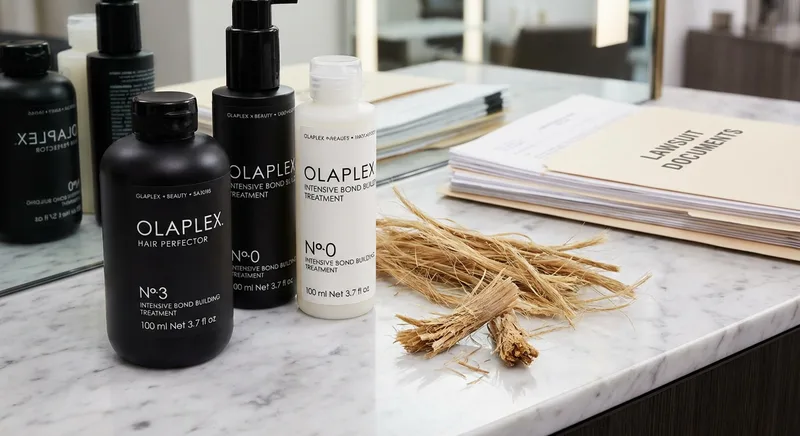
Olaplex was the hair care industry's miracle. The science-backed, salon-recommended, influencer-endorsed treatment that promised to repair broken disulfide bonds in damaged hair at the molecular level. It wasn't just a conditioner. It wasn't just a mask. It was chemistry — a patented system that worked at the molecular structure of the hair itself, repairing the damage caused by bleaching, coloring, and heat styling.
Stylists loved it. Influencers worshipped it. The $28 No. 3 Hair Perfector became the best-selling prestige hair product on Amazon. Olaplex was the rare beauty product that had both the science credentials and the social media cachet to command premium prices from consumers who believed they were investing in their hair's future.
Then the lawsuits arrived.
Twenty-eight plaintiffs filed a class-action lawsuit alleging that Olaplex products caused hair loss, scalp irritation, blisters, and rashes. The product that was supposed to repair your hair was allegedly damaging it. The bond builder was allegedly breaking bonds. The molecular repair treatment was allegedly causing molecular distress.
And then there was lilial.
Lilial (butylphenyl methylpropional) is a fragrance ingredient that the European Union banned from cosmetics in March 2022 after classifying it as a potential reproductive toxicant. Olaplex No. 3 contained lilial. The ingredient was listed on the label. In Europe, where it was banned. In the United States, where it wasn't — because the U.S. cosmetics regulatory framework doesn't automatically adopt EU ingredient bans, and American consumers are apparently expected to cross-reference international regulatory databases before washing their hair.
Olaplex subsequently reformulated to remove lilial. But the timeline matters: the product was sold with a EU-banned ingredient on the label, in the EU, after the ban. And in the U.S., where no ban existed, consumers were unknowingly using a product containing an ingredient that European regulators had determined was potentially dangerous enough to prohibit.
The Vision: Molecular Repair (at the Molecular Price)
Olaplex's technology was genuinely innovative. Traditional conditioners coat the hair surface. Olaplex's patented bis-aminopropyl diglycol dimaleate works inside the hair shaft, reconnecting broken disulfide bonds that give hair its structure and strength. This is real chemistry. Peer-reviewed chemistry. The kind of chemistry that made salon professionals genuinely excited about a product.
The excitement was justified by the science and amplified by the marketing. Olaplex positioned itself as the thinking person's hair care — science-forward, results-driven, and premium-priced. The No. 3 Hair Perfector became a status product, displayed in bathrooms the way some people display their reading material: look how sophisticated my hair care is.
The dissonance between "molecular repair" and "alleged hair loss" is what makes the Olaplex story so jarring. This wasn't a cheap drugstore product with questionable ingredients. This was a $28-per-bottle premium treatment recommended by professionals. The expectation of quality was proportional to the price. The disappointment was, too.
The Glorious User Experience
Natalie from Brooklyn, NY — ★☆☆☆☆
"I used Olaplex religiously because my colorist said it was the best thing to happen to damaged hair. I used No. 3 weekly. No. 4 and No. 5 daily. My hair got progressively worse. Not immediately — slowly. Over months, my hair went from damaged-but-recovering to thin, brittle, and shedding more than before I started treatment. I was paying premium prices for progressive damage. The irony is not lost on me. One star."
Ava from Los Angeles, CA — ★☆☆☆☆
“It was chemistry — a patented system that worked at the molecular structure of the hair itself, repairing the damage caused by bleaching, coloring, and heat styling”
Click to Tweet"The scalp blisters. I developed actual blisters on my scalp from Olaplex No. 4 shampoo. Small, painful, raised bumps that my dermatologist identified as contact dermatitis — an allergic reaction to something in the formula. The product designed to repair the inside of my hair was burning the outside of my scalp. One star."
Sam from Chicago, IL — ★☆☆☆☆
"I learned about the lilial situation from a TikTok, which is how Americans learn about carcinogens in their products now — not from the FDA, not from the brand, but from a 22-year-old in a bathroom with a ring light. Europe banned it. We didn't. I'd been using a product with an ingredient that an entire continent decided was too dangerous for cosmetics, and I found out from social media. One star for the product. Five stars for the 22-year-old."
Jennifer from Dallas, TX — ★☆☆☆☆
"I bought Olaplex because it was the most recommended product in every hair care forum I followed. Everyone said it was the gold standard. The gold standard allegedly caused hair loss in 28 people who cared enough to join a lawsuit. How many more people experienced damage and just stopped using it? The gold standard was pyrite. One star."
The Truth: When the Fixer Needs Fixing
The class-action lawsuit, filed in 2023, alleged that Olaplex products contained ingredients that caused adverse reactions including hair loss, scalp damage, and allergic reactions. The lawsuit centered not just on individual ingredient concerns but on the broader allegation that Olaplex's marketing presented the products as universally safe when they were not.
The lilial controversy added a second dimension. Olaplex's initial response to the EU ban was that their products were safe and that the concentration of lilial in their formulation was within safety thresholds. The EU disagreed. Olaplex eventually reformulated to remove lilial from all products, but the reformulation raised its own questions: if lilial was safe at the concentrations used, why remove it? And if it wasn't safe, why was it there in the first place?
The broader issue is the regulatory gap between the EU and the U.S. The EU has banned or restricted over 1,300 chemicals from cosmetics. The U.S. has banned approximately 11. American consumers use products every day that contain ingredients banned in Europe, and the information asymmetry means most consumers have no idea.
Olaplex remains available and widely sold. The reformulated products no longer contain lilial. The lawsuit continues. The brand's reputation, once bulletproof, now carries an asterisk — the kind of asterisk that appears when a gold standard turns out to have been selling gold-plated.
The Verdict
Olaplex is the cautionary tale of premium beauty: a product can be scientifically innovative, professionally recommended, and socially prestigious, and still allegedly cause the damage it claims to prevent. The molecular bond repair brand is now bonded to a lawsuit alleging it broke people's hair. The premium price tag didn't buy premium safety. And the lilial controversy revealed that American consumers are unknowingly participating in a regulatory experiment that Europe has already decided is too risky.
We rate it 1 out of 5 intact bonds.
If you want bond repair that hasn't been sued for breaking bonds, see our alternatives below.
---
✅What to Buy Instead
K18 Leave-In Molecular Repair Mask
Biotech peptide treatment that repairs hair at the molecular level — the next generation of bond repair without the litigation.
Redken Acidic Bonding Concentrate
Professional-grade bonding system from a heritage brand without the controversy. Repairs without the asterisk.
Mielle Organics Babassu Oil Conditioner
Natural oil-based deep conditioning from a Black-owned brand. Nourishes without molecular promises or molecular lawsuits.
Comments
Sign in or create an account to join the discussion.