
Onasti Toddler Tower Stools: The Product Designed to Help Kids Reach New Heights Helped Them Reach the ER
Recalled after causing brain injuries — foldable plastic that could collapse under a toddler or tip over during use
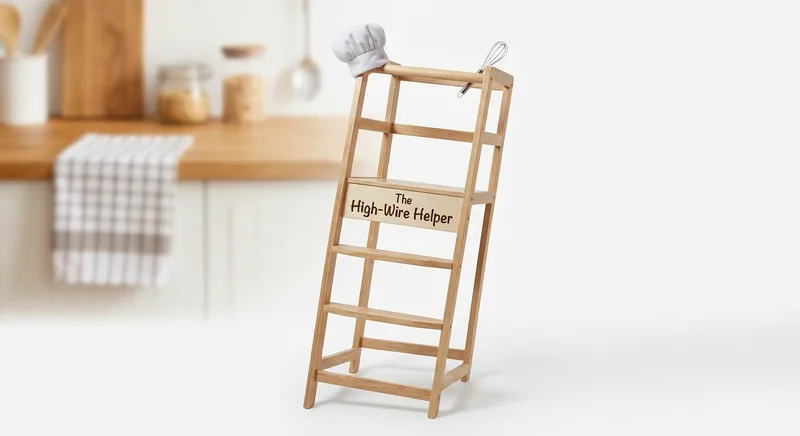
Toddler towers are kitchen helpers — elevated platforms that allow toddlers to stand at counter height alongside their parents during cooking, baking, and meal prep. The concept is lovely: include your child in kitchen activities, foster independence, teach cooking skills, and create shared memories that don't involve the child standing on a chair that wasn't designed for a two-year-old's interpretation of balance.
The execution, in the case of Onasti, was a foldable plastic stool that collapsed under toddlers and tipped over during use, causing brain injuries.
The CPSC recalled Onasti toddler tower stools after reports of the product either folding inward while a child was standing on it or tipping sideways during use. In both scenarios, the child fell from counter height — approximately 30-36 inches — to a hard floor. Toddlers' heads are disproportionately large relative to their bodies, making head-first falls especially dangerous. The brain injuries reported were not minor bumps. They were the kind of injuries that generate emergency room visits and CPSC recall notices.
The product was sold primarily on Amazon at a price point significantly below established toddler tower brands. The Guidecraft Kitchen Helper, one of the market leaders, costs $200+. The Onasti cost a fraction of that. The price difference reflected a difference in materials, engineering, and the structural integrity that prevents a product from collapsing when a toddler stands on it — which is, quite literally, the product's only function.
The Design Problem: Foldable = Collapsible
The Onasti toddler tower's selling point was that it folded flat for storage. This is a reasonable convenience feature — kitchen space is limited, and a toddler tower that stores compactly between uses is attractive. The problem is that "foldable" and "structurally stable under a 30-pound load at counter height" are engineering goals that work against each other.
A product that folds must have hinges, joints, or locking mechanisms that transition between collapsed (stored) and expanded (in use) states. If the locking mechanism fails, the product transitions from expanded to collapsed while a child is standing on it. This is not a theoretical concern — it is a predictable failure mode that structural engineers identify and address during the design phase.
Established toddler towers solve this either by not folding at all (the Guidecraft approach — solid wood, always assembled, stable but bulky) or by using heavy-duty locking mechanisms that require deliberate adult action to fold (multiple latches, pins, or locks that cannot be accidentally released).
The Onasti's locking mechanism was insufficient. The foldable design that made it convenient for storage made it dangerous for use. The feature that sold the product was the feature that injured children.
“The CPSC recalled Onasti toddler tower stools after reports of the product either folding inward while a child was standing on it or tipping sideways during use”
Click to TweetThe Amazon Budget Problem (Again)
The Onasti toddler tower follows the same pattern as the CheerKid bath seats and Cumbor baby gates: a budget product sold primarily on Amazon that didn't meet the safety standards of established competitors.
Parents searching "toddler tower" on Amazon see a range of products from $40 to $250+. The $40 options and the $250 options look similar in listing photos. They occupy the same search results. The budget option often has comparable or higher review counts (sometimes inflated). The quality difference — the structural engineering that prevents collapse, the materials that support a child's weight reliably, the locking mechanisms that keep the product expanded — is invisible in the listing.
For baby and children's products, the price gap between budget and established brands often reflects safety engineering, not just brand markup. The Guidecraft Kitchen Helper costs $200 because it's solid wood with tested structural ratings. The Onasti cost less because it was foldable plastic that could collapse. The savings went directly into the product's failure mode.
The Verdict
The Onasti toddler tower stool was designed to help toddlers reach counter height safely and instead dropped them from counter height dangerously. The foldable design that made it convenient was the foldable design that collapsed. The brain injuries were the consequence of choosing a budget product in a category where structural integrity is not a feature — it's the product.
Toddler towers hold children at height. When they fail, children fall from height. The margin for error is zero. The budget for error should also be zero. A product that folds conveniently and collapses unexpectedly is not a compromise worth making when the person standing on it weighs 30 pounds and falls head-first.
If you need a toddler tower, invest in structural integrity. See our alternatives below.
---
✅What to Buy Instead
Guidecraft Kitchen Helper
Sturdy wooden tower with side rails, meeting safety standards. Doesn't fold. Doesn't need to — it doesn't collapse.
Little Partners Learning Tower
Award-winning adjustable tower with safety rails and non-tip design. Tested. Certified. Holds toddlers at height without dropping them.
IKEA BEKVÄM Step Stool
Simple, stable, solid-wood step stool for $20. Has held millions of toddlers worldwide without a single collapse recall. Sometimes simple wins.
Comments
Sign in or create an account to join the discussion.