
The Philips CD-i: The Console That Made Link and Mario Look Like Crimes Against Animation
How a Dutch electronics company lost $1 billion making the worst Nintendo games that Nintendo didn't make
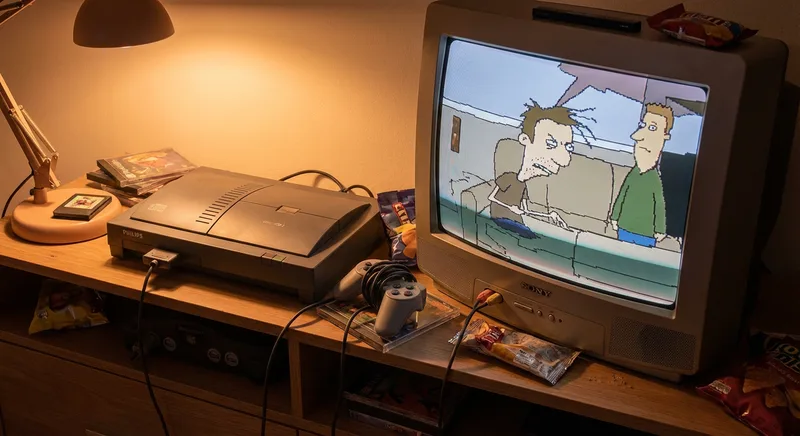
In 1991, Philips released the CD-i, which stood for "Compact Disc Interactive" and should have stood for "Catastrophic Decision, Immediately." It was a multimedia player that could play music CDs, display photos, run educational software, and play video games. It did all of these things with the enthusiasm of a device that knew, deep in its circuit boards, that it was about to lose its parent company over a billion dollars.
But the CD-i's crimes against consumer electronics are not why we're here. We're here because of what the CD-i did to Link, Zelda, and Mario — three of the most beloved characters in gaming history — when it got its hands on them through a licensing deal that Nintendo has spent thirty years pretending never happened.
The CD-i produced three Zelda games and one Mario game. The Zelda games featured animated cutscenes that looked like they were drawn by someone who had heard of animation but never actually seen it. The Mario game featured the Italian plumber in a setting that can only be described as "educational software's fever dream." These games are now legendary — not for being good, but for being so catastrophically bad that they've become the internet's favorite example of what happens when beloved characters fall into the wrong hands.
Nintendo does not acknowledge these games. Nintendo has never acknowledged these games. If you ask Nintendo about the CD-i games, they will change the subject with the smooth efficiency of a politician asked about a scandal.
The Vision: The Future of Multimedia (In 1991 Dollars)
The CD-i was born from a collaboration between Philips and Sony to create a CD-based multimedia standard. When that collaboration fell apart — Sony went on to build the PlayStation, which turned out fine — Philips was left holding the technology and decided to build a consumer device around it.
The result was a $700 machine that was too expensive to be a toy, too limited to be a computer, and too confusing to be anything in particular. It launched with a remote control instead of a game controller, which tells you everything about how seriously Philips took gaming. The controller that eventually shipped was a nightmare of ergonomic hostility — a flat, featureless slab that felt like gripping a cafeteria tray with buttons.
The CD-i's game library was anemic. The hardware couldn't compete with the Super Nintendo or Sega Genesis. The multimedia features were a decade ahead of broadband internet, which meant the interactive content had nowhere to go and nothing to interact with. It was a solution waiting for a problem that wouldn't arrive until the mid-2000s.
But then came the Nintendo deal. And everything got worse.
The Glorious User Experience
Tyler from Chicago, IL — ★☆☆☆☆
"I was twelve years old and my parents bought a CD-i because the salesman told them it was 'educational.' They spent $700. I spent six months playing 'Hotel Mario,' a game where Mario closes doors in a hotel. Not fights enemies. Not rescues princesses. Closes doors. My friends had Super Mario World, which is one of the greatest games ever made. I had a game where Mario performed janitorial duties in a Holiday Inn. The educational content was that I learned what disappointment feels like."
Laura from Houston, TX — ★☆☆☆☆
"I played 'Link: The Faces of Evil' and the animated cutscenes haunt me to this day. Link looks like he was drawn by someone who had a picture of Link described to them over a poor phone connection. His face expresses emotions that don't exist in the human emotional spectrum. The king delivers the line 'My boy, this peace is what all true warriors strive for' with the gravitas of a man ordering a sandwich. This line is now the most quoted piece of Zelda dialogue in internet history, and it's from a game Nintendo wishes didn't exist."
Greg from Minneapolis, MN — ★★☆☆☆
“It did all of these things with the enthusiasm of a device that knew, deep in its circuit boards, that it was about to lose its parent company over a billion dollars”
Click to Tweet"The CD-i as a multimedia player wasn't terrible. It played CDs. It displayed photos. It ran encyclopedia software that was, for 1992, reasonably impressive. The problem was they charged $700 for a device that played CDs when CD players cost $100 and ran encyclopedia software when libraries were free. Then they put Nintendo characters in games that looked like they were created during a power outage. Two stars for the encyclopedia."
Wendy from Portland, OR — ★☆☆☆☆
"'Zelda: The Wand of Gamelon' is the game where Zelda is the playable character, which would be progressive and exciting if the game weren't terrible in every conceivable way. The controls are unresponsive. The art looks like clip art from a 1993 office suite. The dialogue is delivered with all the emotion of automated phone menu options. I beat the game in about four hours and felt like I had lost something I couldn't get back. One star."
The Truth: A Licensing Deal Born From Corporate Divorce
The CD-i Nintendo games exist because of a legal agreement that Nintendo would prefer never happened. In the late 1980s, Nintendo partnered with Sony to develop a CD-ROM add-on for the Super Nintendo. When that deal fell apart — in one of the most consequential breakups in gaming history, since it led directly to the creation of the PlayStation — Nintendo briefly turned to Philips instead.
The Philips deal also fell apart as a hardware collaboration, but as part of the separation agreement, Philips retained the right to use Nintendo characters in games for the CD-i. Nintendo had essentially given Philips a license to make Zelda and Mario games as a consolation prize for a failed partnership, like letting your ex keep the dog because you feel guilty about the divorce.
Philips contracted the games out to third-party developers with small budgets and tight deadlines. The animated cutscenes for the Zelda games were produced by a Russian animation studio, which explains both the visual style and the uncanny valley energy that has made them internet memes thirty years later.
The games themselves were basic side-scrollers with clunky controls, confusing level design, and a general sense that everyone involved knew this was not how Link and Mario were supposed to be treated. Hotel Mario required players to close doors. The Zelda games required players to endure cutscenes. Neither required the level of suffering they inflicted.
The CD-i sold approximately one million units over its lifespan — a fraction of the Super Nintendo's 49 million. Philips lost over $1 billion on the venture. The console was discontinued in 1998, and Philips exited the gaming market permanently, a decision that everyone, including Philips, agrees was correct.
The CD-i games' second life as internet memes has given them a cultural significance they never earned on merit. YouTube Poop — the genre of surreal, remix-heavy internet videos — was built substantially on CD-i Zelda and Mario cutscene footage. "Mah boi" and "I wonder what's for dinner" became catchphrases. The worst Nintendo games ever made became the most quotable.
The Verdict
The Philips CD-i is a $1 billion lesson in what happens when a consumer electronics company that makes lightbulbs and shavers decides it can also make video game consoles. It is the answer to the question "What if Nintendo characters were animated by people who had never played a Nintendo game?" It is a multimedia machine that was too expensive, too confusing, and too cursed by its own Nintendo license to succeed at anything.
The CD-i's legacy is memes. Specifically, memes made from footage of Link saying things no version of Link should ever say, rendered in an animation style that no version of Link should ever be rendered in. Nintendo has spent three decades pretending these games don't exist, which is the most damning review any product has ever received.
We rate it 1 out of 5 animated cutscenes.
If you want to play actual Mario and Zelda games that don't look like they were drawn during a séance, see our alternatives below.
---
✅What to Buy Instead
Steam Deck OLED
Access decades of gaming history through Steam with a gorgeous portable OLED display. Zero cursed cutscenes included.
Xbox Series X
Powerful next-gen console with backward compatibility spanning four console generations. Hotel door-closing simulator not available.
Comments
Sign in or create an account to join the discussion.