
Pillowfort Weighted Blankets: Target's Own Brand Marketed as Cozy That Became a Suffocation Hazard
Recalled for asphyxiation risk after children could become entrapped inside the removable cover — a death trap sold in the children's bedding aisle
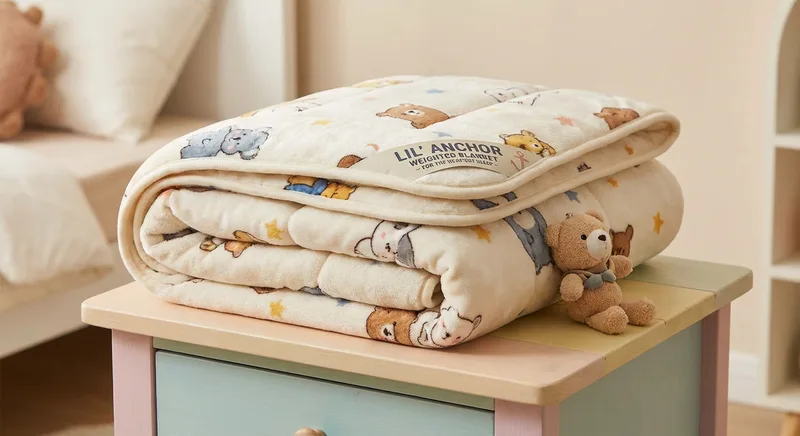
Target's Pillowfort brand is their in-house children's home line — bedding, décor, furniture, and accessories designed for kids' bedrooms and sold under a brand name that evokes exactly the kind of cozy, safe, imaginative space every parent wants to create for their child.
In December 2022, Target recalled approximately 450,000 Pillowfort weighted blankets after two children died. The children became entrapped inside the blanket's removable cover, suffocated, and died.
The weighted blanket had a removable, zippered cover — a duvet-style design where the weighted insert could be removed from the outer cover for washing. Children unzipped the cover, crawled inside, and could not get out. The weighted insert — designed to provide the calming pressure that is the entire point of a weighted blanket — became the weight that trapped them inside the cover, pressing against them and preventing them from repositioning or escaping.
Two children died inside a blanket sold in the children's bedding section of the most trusted retailer in America. Sold under Target's own brand. In the children's section. For children.
The Design Flaw: Removable Covers on Children's Products
The engineering of the Pillowfort weighted blanket created a specific hazard: the combination of a zippered cover large enough for a child to enter and a weighted insert heavy enough to prevent a child from exiting.
Weighted blankets work by distributing weight across the body — typically 5-15 pounds for children's versions — creating gentle pressure that can reduce anxiety and improve sleep. The weight is the product's purpose. The weight, inside a zippered cover with a child trapped inside, becomes the mechanism of suffocation.
The removable cover was a convenience feature — it allowed parents to wash the cover without washing the heavy insert. This is a reasonable design choice for adult weighted blankets. For children's weighted blankets, it creates a scenario where a curious child can unzip the cover, crawl inside, and become trapped under a weight they cannot lift from the inside.
Children explore. Children crawl into enclosed spaces. Children are attracted to blanket forts, sleeping bags, and any fabric enclosure that creates a "hiding" sensation. A zippered weighted blanket cover is, to a child, an invitation. The design should have anticipated this. It didn't.
What Target Did
Target recalled all Pillowfort children's weighted blankets — approximately 450,000 units sold between December 2018 and September 2022. Consumers were instructed to immediately stop using the blankets and return them to any Target store for a full refund.
The recall was significant not just for the scale but for the source: Target's own brand. Private-label products from major retailers carry an implicit trust that extends beyond the product to the retailer. Parents who bought Pillowfort weighted blankets weren't just trusting the blanket. They were trusting Target — the store where they bought diapers, car seats, and strollers. Target's brand was on the label.
“The weighted blanket had a removable, zippered cover — a duvet-style design where the weighted insert could be removed from the outer cover for washing”
Click to TweetThe deaths prompted broader attention to children's weighted blankets as a product category. The American Academy of Pediatrics has not specifically addressed weighted blankets in their safe sleep guidelines, but occupational therapists who recommend weighted blankets for children with sensory processing disorders typically specify blankets without removable covers and weight limits appropriate to the child's age and size.
The Broader Issue: Weighted Blankets for Young Children
The weighted blanket trend — driven by anxiety awareness, sensory processing conversations, and social media promotion — has expanded the market to include products for increasingly young children. This expansion has outpaced safety guidance.
Key considerations that the Pillowfort design didn't adequately address:
- Removable covers: On children's weighted blankets, removable covers create entrapment risk. Sewn-in, non-removable covers eliminate this risk.
- Weight: The general guideline is 10% of body weight plus one pound. A blanket that's too heavy for a child can restrict movement and breathing.
- Age: Most OTs and pediatricians recommend weighted blankets only for children over 5 years old. For younger children, the risks outweigh the benefits.
- Supervision: Weighted blankets should be used with parental awareness, especially for young children who may not be able to reposition themselves.
For children under 5, weighted blankets are not recommended by any major pediatric authority, regardless of design. The Pillowfort blankets were marketed broadly in the children's section without prominent age restrictions that might have prevented use with younger children.
The Verdict
The Pillowfort weighted blanket recall is a tragedy that was enabled by a design choice — the removable cover — that prioritized washing convenience over entrapment prevention. Two children died inside a blanket sold by Target, under Target's own brand, in Target's children's section.
The weighted blanket industry's rapid growth has created a market where products are designed for comfort and marketed for anxiety relief without adequate safety engineering for their youngest users. A weighted blanket for a child must account for the fact that children are curious, mobile, and will interact with the product in ways the designer didn't intend.
A blanket that a child can crawl inside and not escape from is not a blanket. It is a trap. The Pillowfort weighted blanket was both.
If you're considering a weighted blanket for a child, consult your pediatrician and use only products designed with child-specific safety features. See our alternatives below.
---
✅What to Buy Instead
Bearaby Nappling (Ages 5+)
Knitted weighted blanket with an open-weave design — breathable, no cover to crawl inside, and the knit structure prevents entrapment.
Harkla Weighted Blanket for Kids
OT-recommended with specific weight and age guidelines printed on the product. Designed for children with sensory needs by a company that understands the safety requirements.
Regular Comforter
For children under 5, weighted blankets are not recommended by pediatric experts. A regular comforter provides warmth without weight risk. Sometimes the safest option is the simplest one.
Comments
Sign in or create an account to join the discussion.