
The Samsung Galaxy Fold: The $2,000 Phone That Folded Exactly as Promised — Also When You Didn't Want It To
How Samsung's first foldable phone broke in reviewers' hands within 48 hours and taught the world that some screens should remain flat
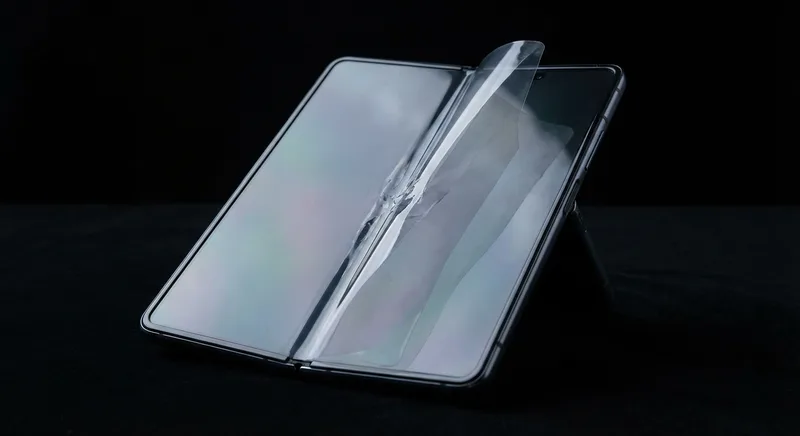
On April 15, 2019, Samsung sent Galaxy Fold review units to some of the most prominent tech journalists in America. By April 17 — forty-eight hours later — four of them had broken phones.
The Verge's Dieter Bohn found a mysterious bulge under his display that broke the screen after one day. CNBC's Steve Kovach watched half his screen flash blinding white. Bloomberg's Mark Gurman peeled off what looked like a screen protector — a reasonable assumption for a person who reviews phones for a living — and killed the display. YouTuber Marques Brownlee did the same thing.
Four review units. Four major publications. Four broken screens. Two days. Two thousand dollars per phone.
Samsung had just given the most connected tech journalists on Earth the most expensive smartphones in the world, and within the time it takes to binge a Netflix series, the phones had self-destructed in front of an audience of millions. This was not a product launch. This was a live demonstration of what happens when a company ships a prototype and calls it finished.
The Vision: The Phone of the Future (Held Together with Hope)
The Galaxy Fold was supposed to be Samsung's moonshot — a 7.3-inch OLED display that folded in half like a book, creating a phone that was also a tablet. Open it for the big screen. Close it for your pocket. The future of mobile computing, available for the pre-recession price of $1,980.
The engineering was, in fairness, genuinely impressive. Samsung had developed a flexible OLED panel, a hinge mechanism with thousands of interlocking gears, and an interface that seamlessly transitioned between the folded and unfolded states. The problem wasn't the ambition. It was that Samsung rushed the ambition to market approximately twelve months before the ambition was ready.
The display was covered with a thin polymer layer that looked, felt, and peeled exactly like the removable screen protectors that Samsung ships on literally every other phone they make. It was a critical structural component disguised as disposable packaging. Samsung's review units did not include the warning about not removing it. Consumer units would later ship with the warning, but the review units — the ones sent to the people whose entire job is to test products and tell millions of readers what they think — arrived without it.
This is like sending a car to an automotive journalist without mentioning that the windshield is load-bearing.
The Glorious User Experience
Steve from New York, NY — ★☆☆☆☆
"I'm a tech reviewer. I've reviewed approximately three thousand phones. Every Samsung phone I've ever reviewed has shipped with a removable screen protector. Every. Single. One. So when the Galaxy Fold arrived with what appeared to be a removable screen protector, I began to peel it. This was not reckless behavior. This was muscle memory developed over a decade of reviewing Samsung phones. The screen went black. I had just killed a $2,000 phone by doing the thing Samsung trained me to do with every phone they'd ever sent me. One star."
Dieter from Brooklyn, NY — ★☆☆☆☆
"I did NOT remove the protective layer. I left it on. My screen still developed a bulge at the crease — a small protrusion pushing through the display from underneath. After one day. One day with a $2,000 phone and it grew a tumor. I could feel the bump under my finger when I swiped. The screen distorted around it like the phone was trying to give birth to a smaller, angrier phone. Samsung asked for the unit back. I gave it back. I did not give back my trust."
Amanda from San Francisco, CA — ★☆☆☆☆
"I was in line at CVS when I opened my Fold and saw a dead pixel cluster right in the crease. Just appeared. No impact, no drop, no peeling, no debris. It simply decided to die while I was buying toothpaste. The screen had lasted longer than many of the first-wave review units, but the bar was so low that 'lasting a week' felt like an accomplishment. My $2,000 phone broke while I bought a $4 toothbrush. The universe has a sense of humor. One star."
Carlos from Miami, FL — ★★☆☆☆
“The Verge's Dieter Bohn found a mysterious bulge under his display that broke the screen after one day”
Click to Tweet"I had a pre-order that Samsung cancelled when they recalled the phone. I waited through the redesign and bought the relaunched version in September 2019. It worked. For six months. Then the crease developed a visible line that grew into a crack that grew into a conversation with a Samsung support representative who told me the damage was 'cosmetic.' A crack across the middle of the screen is 'cosmetic' in the way that a hole in a boat is 'ventilation.' Two stars because when it worked, it was genuinely magic."
The Truth: Samsung's Worst PR Week Since the Note 7 (Which Was Also Samsung)
The timeline of the Galaxy Fold launch is a masterclass in corporate crisis compressed into a single week.
April 15: Review units shipped to journalists. Samsung PR is confident. Pre-orders are live for April 26.
April 17: Four broken screens across four major publications. Twitter erupts. Samsung issues a statement saying it will "thoroughly inspect these units." The statement does not acknowledge that the phones are broken. It acknowledges that "reports" exist, which is a different thing.
April 18: Samsung PR tells the Wall Street Journal there are "no changes to the plans." The Galaxy Fold will launch April 26 as scheduled. This is optimism that borders on clinical delusion.
April 22: Samsung delays the launch indefinitely. The company has apparently inspected the units and discovered what the journalists discovered two days earlier: the phones were broken.
April 23: Samsung recalls all review units worldwide. Reuters reports the company is asking every journalist to return their Fold. The most anticipated phone of 2019 is being physically retrieved from the people Samsung gave it to.
Samsung spent the next four months redesigning the Fold. They extended the protective layer beyond the edges of the display so it couldn't be peeled. They added caps to the top and bottom of the hinge to block debris. They relaunched in September 2019 with an improved design and aggressive warnings not to touch, peel, or breathe on the screen.
The relaunched version was better. Not perfect — crease durability remained a concern, and the screen still felt fragile in a way that $2,000 phones shouldn't — but better. Samsung would go on to release the Z Fold 2, 3, 4, 5, 6, and 7, each generation meaningfully improving on the last. The Z Fold 7, released in 2025, is genuinely excellent.
But the original Fold remains a monument to what happens when a company's marketing calendar outpaces its engineering timeline. Samsung knew the phone wasn't ready. They shipped it anyway because Huawei was about to ship its own foldable and being second was unacceptable. Being first with a broken phone, it turned out, was worse.
The Verdict
The Samsung Galaxy Fold is the most expensive public beta test in smartphone history. It was a $2,000 prototype sold as a finished product to consumers and given to journalists who broke it in the time most people take to set up a new phone.
The Fold's legacy is complicated. It proved that foldable phones were possible. It also proved that possible and ready are different words with different meanings, and that rushing the former doesn't accelerate the latter.
Six generations later, Samsung makes the best foldable phones on Earth. The Galaxy Z Fold 7 is slim, durable, and magical in exactly the way the original Fold wanted to be. But the original Fold had to happen first — breaking, peeling, bulging, and self-destructing its way into history as the phone that taught Samsung, and the world, that the future of phones needs more than forty-eight hours of testing.
We rate it 1 out of 5 intact screens.
If you want a foldable phone that survives contact with your pocket, see our alternatives below.
---
✅What to Buy Instead
Google Pixel 9 Pro Fold
Best camera system in any folding phone, with Google's software polish and a display that stays attached to the phone.
OnePlus Open 2
Best value flagship foldable with a massive inner display, Hasselblad cameras, and a hinge that doesn't require a warning label.
Comments
Sign in or create an account to join the discussion.