
The Brands That Died So You Could Get 40% Off During the Going-Out-of-Business Sale
Over 8,200 retail stores closed in 2025. We reviewed the wreckage.
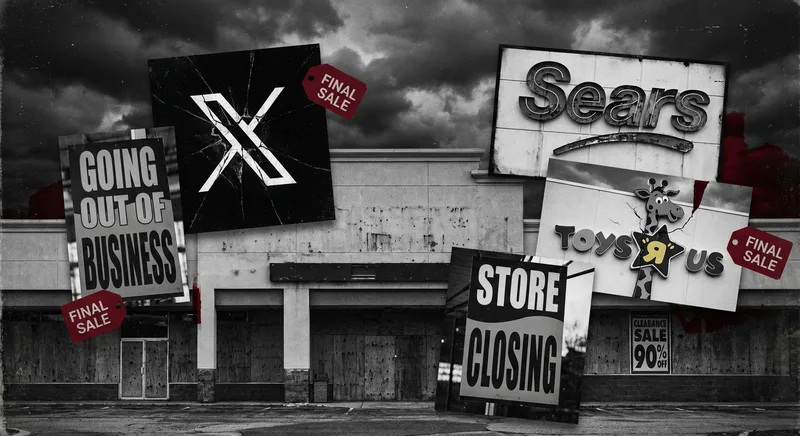
Every dead brand tells the same story. Act one: we're visionaries. Act two: we're leveraged. Act three: we're filing for Chapter 11 and the CEO would like to assure customers that "the brand's legacy will endure" — which, translated from corporate euphemism, means "we're selling the logo to a private equity firm that will slap it on a line of Walmart underwear within 18 months."
In 2024, over 7,300 retail stores closed in the United States — up nearly 58% from 2023. In 2025, that number climbed to roughly 8,200. These aren't just numbers. These are Party City balloons that will never be inflated again. Tupperware lids that will never find their matching container. Forever 21 crop tops that will forever remain on the clearance rack, marked down to $2.99, purchased by no one.
We reviewed the most spectacular brand deaths of the past two years. Pour one out for the fallen.
Tier 1: The Icons That Didn't Make It
Tupperware — Filed September 2024
What They Promised: Airtight food storage. The American kitchen, organized. A party in your neighbor's living room where someone tries to sell you a salad spinner.
What Actually Happened: Tupperware became the thing in the back of your cabinet that you keep meaning to match with a lid but never do — and then it filed for bankruptcy. The 78-year-old brand had been losing relevance for years as cheaper competitors flooded the market and the "Tupperware party" model aged out of viability alongside rotary phones and door-to-door vacuum salesmen. The company's plastic food storage containers — once a symbol of postwar American optimism — became a symbol of a company that couldn't figure out how to sell things on the internet. The brand name and intellectual property were bought by a private equity firm in late 2024, because of course they were. Somewhere, your grandmother's Tupperware cabinet just felt a great disturbance.
Consumer Equivalent: Your most reliable kitchen product outliving the company that made it by 40 years.
Party City — Final Closure 2025
What They Promised: Everything you need for a celebration. Balloons, streamers, costumes, joy.
What They Delivered: A 40-year-old party that finally ended — but not before stiffing its employees on severance.
Party City first declared bankruptcy in January 2023, staggering under $1.7 billion in debt. It emerged, zombied around for a bit, then announced in late 2024 that it was closing all remaining stores for good. The final locations shuttered in February 2025. Laid-off employees reportedly didn't receive severance pay, which is the corporate equivalent of throwing a party, making someone else clean up, and skipping out on the tip. The real cause of death? Competition from e-commerce, Walmart, Target, and Spirit Halloween — a seasonal pop-up store that kept appearing in the corpses of dead Party City locations like some kind of retail ouroboros.
Consumer Equivalent: Being invited to a party and arriving to find the host has already left and taken the good snacks. You can have the leftover Mylar balloon. It's deflating.
Forever 21 — Filed March 2025 (Second Bankruptcy)
What They Promised: Fast fashion for teens. Trendy. Cheap. Forever young.
What They Delivered: A name that aged worse than the clothes.
Forever 21 filed for bankruptcy for the second time and closed all 500-ish US stores. The company blamed "economic challenges impacting our core customers" — cost-sensitive teens who had, by 2025, migrated to Shein and Temu for their disposable fashion needs. It turns out that when your business model is "clothes so cheap they disintegrate after two washes," there will always be someone willing to do it cheaper. The brand essentially got out-cheaped by the internet, which is like being told you're too reckless by a guy doing backflips on a motorcycle.
Consumer Equivalent: The $8 shirt you bought in 2016 that you still wear because the store no longer exists to replace it.
Rite Aid — Final Closure October 2025
What They Promised: Your neighborhood pharmacy. Prescriptions, greeting cards, a vaguely threatening fluorescent-lit shopping experience.
What They Delivered: Two bankruptcies in two years, $4 billion in debt (partly from lawsuits over allegedly filling unlawful opioid prescriptions), and a 63-year legacy flushed down a drain that even Drano couldn't unclog.
Rite Aid first filed for bankruptcy in October 2023, emerged in September 2024 having shed $2 billion in debt and 500 stores, then filed again in May 2025. The final 89 stores closed in October. CVS bought prescription files from 625 locations. Walgreens and Kroger picked through the remains like estate sale shoppers. The pharmacy's cult-favorite Thrifty ice cream brand was sold off during the proceedings, which somehow feels like the saddest detail in this entire story — a 62-year-old ice cream brand, orphaned by bankruptcy, adopted by strangers.
Consumer Equivalent: Returning to the pharmacy to refill your prescription and finding a "For Lease" sign. Your blood pressure medication is now at a CVS 4.7 miles away. Your blood pressure just went up.
Tier 2: The Mid-Tier Collapses
Big Lots — Filed September 2024
What They Promised: Discount everything. The treasure hunt of off-brand shopping.
What They Delivered: 963 locations closed. A private equity buyout deal that fell through at the last minute. The discount store that couldn't discount its way out of debt. Big Lots was the retail equivalent of that friend who says "I'm great with money" while their credit card declines at Wendy's. When your entire brand is "we sell stuff cheap" and you still can't make the numbers work, the product category has spoken.
“" In 2024, over 7,300 retail stores closed in the United States — up nearly 58% from 2023”
Click to TweetExpress — Filed April 2024
What They Promised: Business casual. Date night outfits. The mall staple for millennials who needed a blazer.
What They Delivered: A bankruptcy filing after years of merchandise nobody wanted. Nearly 100 stores closed. The company was sold for $174 million to a consortium that also acquired Bonobos from the wreckage. Express is what happens when a clothing brand can't answer the question "who are we for?" for an entire decade. They tried trendy. They tried professional. They tried "trendy professional." The mall moved on. Express didn't.
Joann (Fabric & Craft) — Closed 2025 (After Two Bankruptcies)
What They Promised: The crafting superstore. Fabric, yarn, sewing supplies. The place your grandmother loved.
What They Delivered: An IPO, a billion dollars in debt, two bankruptcies in under a year, and a wind-down that ended with the brand being absorbed into Michaels stores. Joann went public after the pandemic craft boom, raised $131 million, and tried to pay down nearly $1 billion in debt. Net sales declined every quarter for two years straight. They emerged from the first bankruptcy in April 2024. Filed again in January 2025. By February, they were winding down operations entirely. The brand now exists as "Knit & Sew Shops" inside Michaels, which is the retail equivalent of being absorbed by your competitor's digestive system and continuing to exist as a nutrient.
True Value — Filed October 2024
What They Promised: 75 years of hardware retail. Your local hardware store's trusted supplier.
What They Delivered: A bankruptcy filing blaming the stalled housing market and consumers being "more picky about discretionary purchases like hardware." Which — and we cannot stress this enough — means people stopped buying things at hardware stores when they stopped buying houses. True Value stores remain technically open because they're independently owned and weren't part of the bankruptcy proceedings, which means the brand is dead but its body is still walking around wearing a name tag.
Tier 3: The "We Tried to Rebrand Our Way Out of This" Award
Jaguar — Not Bankrupt, But Possibly Worse
The Pitch: Luxury British automaker. Sleek. Powerful. The car James Bond would drive if he had taste.
The Rebrand: In 2024, Jaguar halted all retail car operations to pivot to an all-electric lineup and launched a campaign called "Copy Nothing" that, notably, did not feature any cars. European sales crashed to 49 units in a single month. Forty-nine. That's not a sales figure, that's a carpool. Jaguar effectively told its existing customers "we're not for you anymore" without securing any new customers first. The new logo looks like a wellness app. The marketing features models in avant-garde outfits posing in a pink desert. At no point does anyone appear to be near, inside, or thinking about a car. This is what happens when your brand strategy moves faster than your product strategy — you end up standing in a beautifully designed showroom with nothing to sell.
Stoli (Stolichnaya) Vodka — Filed 2025
The Pitch: Iconic Russian vodka. Except it's actually been made in Latvia since the early 2000s, after the founder got on Putin's bad side.
The Collapse: Stoli got caught in the anti-Russian backlash following the Ukraine invasion (despite not being Russian anymore), shortened its name from Stolichnaya to "Stoli" in response, and then somehow made things worse by over-investing in American spirits. The US subsidiary entered Chapter 11 in 2025. A vodka brand that's not actually Russian, being punished for being Russian, that then lost money on bourbon. You could not write a more perfectly ironic bankruptcy if you tried.
Del Monte — Filed July 2025
The Pitch: 130 years of canned fruits and vegetables. The most recognizable brand in your grandma's pantry.
The Collapse: Del Monte's bankruptcy was shocking to grocery shoppers and completely unsurprising to anyone who'd been watching the company's financials deteriorate for years. The brand that put peaches in every school cafeteria in America discovered that "we've been around for 130 years" is not, in fact, a business strategy. When your core product is canned fruit and the world has moved to fresh, organic, and locally sourced, you're not a heritage brand — you're a time capsule.
The Takeaway
Here's the pattern: private equity loads a beloved brand with debt. The brand tries to service that debt while also competing in a market that's shifted underneath it. Consumers move online, or to cheaper alternatives, or just stop buying the category entirely. The brand files for bankruptcy. Private equity buys the carcass for pennies. The logo gets slapped on something new. Rinse, repeat.
Over 15,500 retail stores closed in 2024 and 2025 combined. The brands you grew up with are being liquidated, auctioned, and dismembered by investment firms whose only product is debt. Your childhood mall is now a fulfillment center. Your favorite store is now a "brand experience" that exists exclusively on Instagram. The Going-Out-of-Business sale is, at this point, America's longest-running retail event.
What We Actually Recommend Instead
1. Buy from brands that aren't owned by private equity. If a company's parent is a three-letter acronym you've never heard of, that company is one quarterly earnings miss from liquidation.
2. Support local and independent. Your local hardware store, fabric shop, or pharmacy isn't carrying $4 billion in litigation debt. Probably.
3. Stop mourning brands. Start mourning workers. Every one of these closures represents thousands of people who lost their jobs, often without severance, while executives got retention bonuses. The brand will be fine — it'll get bought and relaunched as a DTC Instagram thing. The cashier who worked there for 12 years will not.
Overall Rating: ★½☆☆☆ — "Products recalled. Brand sold for parts. Logo now appearing on a lower-quality product at a higher price. Capitalism is working as intended."
No Want This reviews products so you don't have to. For more reviews of things that should never have existed, visit nowanttthis.com.
Comments
Sign in or create an account to join the discussion.