
America's Worst Colleges — Bankrupt, Unaccredited, and Somehow Still Charging Tuition
We enrolled in failure so you don't have to.
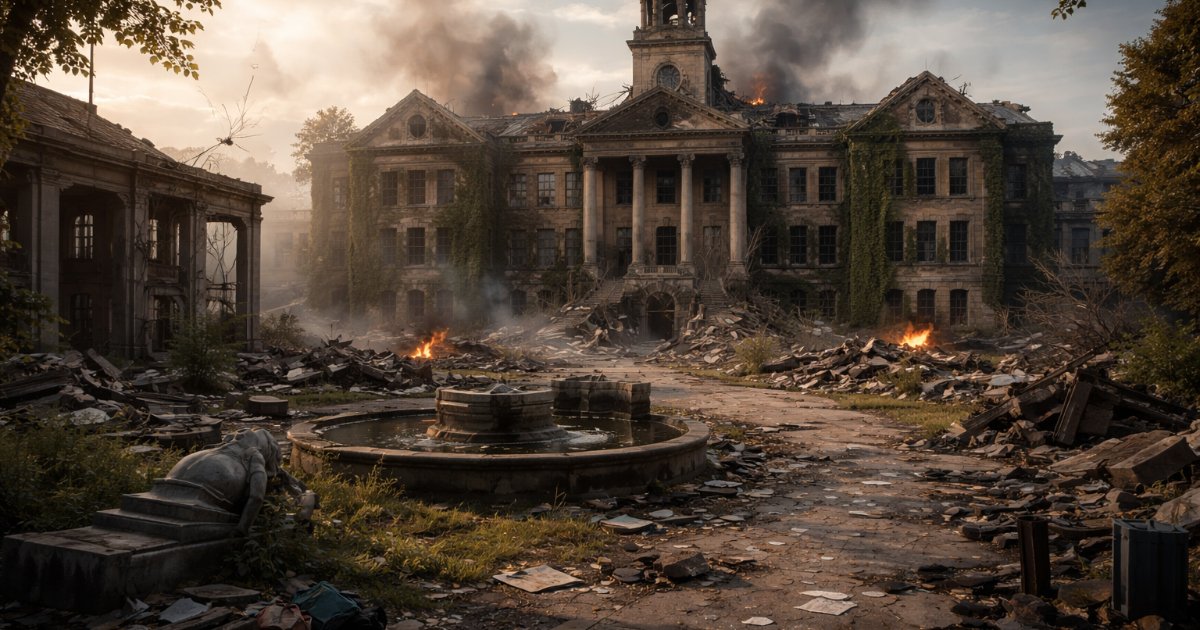
There's a special kind of betrayal that comes with paying $40,000 a year for a degree from a school that no longer exists by the time you frame the diploma. It's like buying a car and having the dealership dissolve into a cloud of dust the moment you drive off the lot — except the car is a piece of paper, the lot was a crumbling building in rural Pennsylvania, and you still owe Sallie Mae for the next 25 years.
Since 2020, over 80 private nonprofit colleges have closed or merged. In 2024 alone, roughly 30 schools went dark. And in 2025, the body count keeps climbing. The enrollment cliff is here, the endowments have evaporated, and your alma mater's mascot is now a "For Sale" sign.
We reviewed the worst of the worst. Grab your transcripts — while they still exist.
The "Closed While You Were in Class" Tier
University of the Arts (Philadelphia, PA) — Closed 2024
What They Promised: A prestigious 148-year-old arts institution in the heart of Philly. What They Delivered: A one-week eviction notice.
UArts told students and faculty in June 2024 that the school would close in seven days. Not seven months. Seven days. No transition plan. No teach-out agreements. Just "hey, we know you're halfway through your MFA in sculpture, but maybe try YouTube?" The Middle States Commission yanked their accreditation not because the school was academically failing, but because announcing you're shutting down in a week with no plan for your students is, apparently, frowned upon by people who care about education. UArts briefly regained accreditation so some students could get diplomas, then collapsed for good. A 148-year legacy undone with the urgency of a text breakup.
Consumer Equivalent: Buying concert tickets and finding out the venue burned down on your way there. The band knew for months. They just didn't want to deal with refunds.
Alderson Broaddus University (Philippi, WV) — Closed 2023
What They Promised: A small Christian liberal arts education in the hills of West Virginia. What They Delivered: A bankruptcy filing and the governor begging regulators to give them one more chance.
West Virginia's governor personally intervened to buy the school more time. It didn't help. The Higher Education Policy Commission stripped their degree-granting authority in August 2023. The school filed for bankruptcy the same month. Students mid-semester were told to find new schools. Enrollment had cratered. The facilities were deteriorating. The whole thing reads like the Wikipedia page for a haunted hospital, except the ghosts still owe student loans.
Consumer Equivalent: Your landlord asking the judge for one more month, then getting evicted anyway, except you're the one sleeping on the street.
Alliance University / Nyack College (New York, NY) — Closed 2023
What They Promised: A fresh start. They sold their campus in 2020, rebranded from Nyack College to Alliance University in 2022, and moved to New York City. Bold. Visionary. A phoenix from the ashes. What They Delivered: A different kind of ash.
The rebrand lasted about 14 months before the Middle States Commission placed them on probation for financial issues in March 2023, and the school collapsed by August with no approved teach-out plan. Enrollment had been sliding for a decade — from over 3,000 students in 2013 to under 1,900. Selling your campus and changing your name is the college equivalent of a restaurant putting "Under New Management" on the sign while the health inspector padlocks the back door.
Consumer Equivalent: A company rebranding its recalled product with new packaging. Same defects. Fancier label. Zero accountability.
The "Currently on Life Support" Tier
St. Augustine's University (Raleigh, NC) — Accreditation: It's Complicated
What They Promised: A historically Black university with over 150 years of tradition. What They Delivered: An accreditation soap opera that makes Days of Our Lives look understated.
In 2023, their accreditor voted to terminate accreditation. St. Augustine's appealed and won in arbitration. In December 2024, the accreditor revoked it again. The school appealed again. By spring 2025, they lost that appeal too — but got yet another shot through arbitration. Meanwhile, enrollment collapsed to just 200 students. They held an emergency December graduation so students could get degrees from a technically-still-accredited institution before the clock ran out. This school's accreditation status changes more often than most people change their passwords.
Consumer Equivalent: Your subscription getting cancelled, reinstated, cancelled again, and you're now on a "provisional trial" that expires every 90 days. You still get charged.
Defiance College (Defiance, OH) — On Probation
What They Promised: A small college that, despite the name, would comply with accreditation standards. What They Delivered: Defiance of accreditation standards.
The Higher Learning Commission placed Defiance on probation in June 2023 for failing to maintain adequate financial resources and academic quality. The college has until 2025 to prove it can function as a place of learning. The irony of a college called "Defiance" being on probation for not meeting standards writes its own headline. At this point, the name isn't a mascot — it's a mission statement.
“Since 2020, over 80 private nonprofit colleges have closed or merged”
Click to TweetConsumer Equivalent: A product called "Unbreakable" arriving in seven pieces with a warranty claim already denied.
North Idaho College (Coeur d'Alene, ID) — Recently Off "Show Cause"
What They Promised: A popular community college serving northern Idaho. What They Delivered: A board of trustees so dysfunctional that the accreditor put them on "show cause" — the academic equivalent of being told to prove why you should be allowed to continue existing.
The Northwest Commission flagged the college in 2023 over governance issues, including a board that had reportedly been influenced by extremist views and was making decisions that undermined the institution's academic mission. When your accreditation problem isn't "we don't have enough textbooks" but "our board might be compromised by ideological extremists," you've entered a failure mode that isn't covered in the student handbook.
Consumer Equivalent: You bought a nice kitchen appliance and then the parent company got taken over by people who don't believe in kitchens.
The "Diploma Mill" Tier (These Were Never Real)
For our readers in the market for a genuinely useless degree, allow us to introduce institutions that were never accredited by anyone who matters:
Geo-Metaphysical Institute (New York): Closed sometime between 2012 and 2018. The name alone should've been a red flag. If your college has "Metaphysical" in the title and isn't Hogwarts, you're paying tuition for vibes.
Transworld Accrediting Commission International: Not a college itself, but an unrecognized accreditation body that "accredited" dozens of unaccredited Bible colleges, Christian universities, and leadership institutes across the country. It's like getting your driver's license from a guy who prints them in his garage — technically it looks real, but it won't hold up at a traffic stop.
Corinthian Colleges (Multiple States): A for-profit empire of 28 campuses that was investigated for inflating job placement statistics, predatory marketing, and predatory loan practices. The Department of Education fined them $30 million. They shut down all 28 campuses within two weeks. The fastest college closure in American history — like a building demolition, except the building was full of students who still owed money on it.
The Numbers That Should Terrify You
Here's the landscape: approximately 312 colleges and universities granting at least associate degrees closed between 2008 and 2024. Private nonprofits are now closing faster than for-profits. A Federal Reserve Bank of Philadelphia report predicted that an abrupt enrollment crash could shutter 80 additional colleges, impacting over 100,000 students and 20,000 staff. Only 47% of students who experienced a college closure between 2004 and 2020 actually re-enrolled somewhere else. The rest just... stopped. Degree incomplete. Loans still very much complete.
In 2024, Forbes gave 182 private colleges a "D" financial grade — up from just 20 in 2021. Pennsylvania alone lost 7 colleges in 2024. New York and Illinois lost 4 each.
How to Spot a College That's About to Become a Memory
Red Flag #1: Enrollment has dropped by more than 20% in the past decade. If the freshman class is smaller than a Costco checkout line, start worrying.
Red Flag #2: They're "rebranding." Nyack became Alliance. Still died. If your school changes its name, it's not evolution — it's witness protection.
Red Flag #3: The accreditor has placed them on "warning," "probation," or "show cause." These aren't suggestions. These are the academic equivalent of "check engine" lights, and this engine is on fire.
Red Flag #4: Leadership turnover. Three presidents in five years means nobody wants to be the one holding the bag when the music stops.
Red Flag #5: They're selling campus buildings. If your library is now a Marriott, your school is not "optimizing its real estate portfolio." It's dying.
The Bottom Line
Higher education in America is a product category in freefall. The premium brands — your Harvards, your Stanfords — are sitting on $50 billion endowments and will outlive the sun. But hundreds of small, tuition-dependent institutions are one bad enrollment year from becoming a LinkedIn memory. If you're picking a college, check the financial health scores. Look at the enrollment trends. Google "[school name] + accreditation." If the top result is a news article with the word "probation" in it, keep scrolling.
Your degree should last longer than the institution that printed it.
Overall Rating: ★☆☆☆☆ — "Product discontinued. Warranty void. You still owe $87,000."
No Want This reviews products so you don't have to. For more reviews of things that should never have existed, visit nowanttthis.com.
Comments
Sign in or create an account to join the discussion.