
OK Soda: When Coca-Cola Tried to Be Counter-Culture and Created the Most Honest Product Name in Beverage History
A mega-corporation's attempt at Gen X nihilism — their own ads described it as 'carbonated tree sap' and the whole thing died in 7 months because irony doesn't hydrate
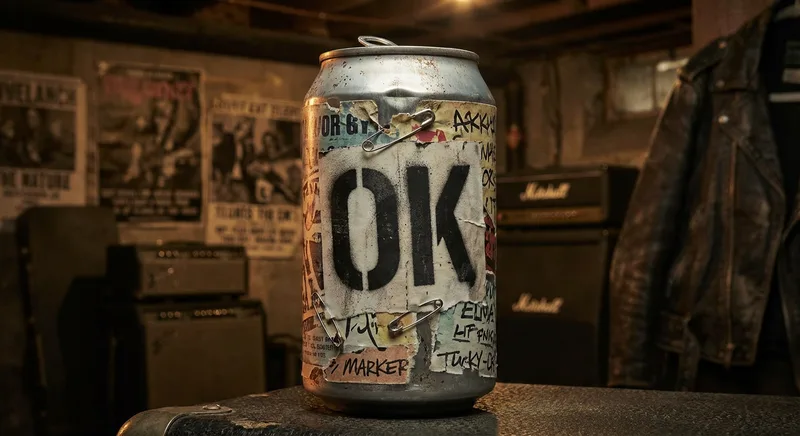
In 1993, Coca-Cola had a problem: Generation X. Gen X didn't trust corporations. Gen X didn't respond to traditional advertising. Gen X was cynical, ironic, disaffected, and suspicious of exactly the kind of cheerful, optimistic, red-and-white branding that made Coca-Cola the most recognized brand on the planet.
Coca-Cola's response was OK Soda — a beverage specifically designed to be un-Coca-Cola. Anti-marketing. Anti-branding. Anti-enthusiasm. The can featured dystopian illustrations by underground comic artists Daniel Clowes and Charles Burns. The ads were deliberately weird, self-deprecating, and nihilistic. The flavor was described by Coca-Cola's own advertising as "carbonated tree sap" — the marketing department writing copy that actively discouraged consumption.
The product name — OK — was chosen because market research showed "OK" was the second most recognized word in the English language after "Coca-Cola." The logic: Coca-Cola was too mainstream for Gen X. "OK" was universal, neutral, and unambitious. The soda's name literally communicated: "This is fine. Not great. Not terrible. OK."
This was supposed to be appealing.
The soda launched in test markets in 1993 and was discontinued in 1995 — seven months of active distribution before Coca-Cola pulled the plug on its attempt to out-cynical the most cynical generation in American history. The result was a beverage that was too ironic for mainstream consumers, too corporate for counter-culture consumers, and too nothing for everyone in between. OK Soda was a $30 million exercise in discovering that corporations cannot do nihilism.
The Vision: What If We Sold Self-Loathing in a Can?
OK Soda's marketing was genuinely interesting — a level of corporate self-awareness and anti-commercial experimentation that had never been attempted at this scale. The cans were deliberately ugly — muted colors, disturbing illustrations, and no attempt at the visual appeal that every other beverage on the shelf was pursuing. The campaign included a 1-800 number (1-800-I-FEEL-OK) where callers could leave confessional messages or listen to pre-recorded existential content. The TV ads were surreal and anti-aspirational.
The "OK Manifesto" included lines like:
- "What's the point of OK? Well, what's the point of anything?"
- "OK Soda says, 'Don't be fooled into thinking there has to be a reason for everything.'"
- "OK Soda does not subscribe to any religion, or endorse any political party, or do anything other than feel OK."
This is a $100 billion corporation writing copy that reads like a first-year philosophy student's Tumblr post. Coca-Cola — the company whose entire brand identity is happiness, togetherness, and polar bears sharing Cokes on a snowy night — was trying to sell nihilism. This is like McDonald's launching a menu item called "Whatever Burger" with the tagline "Food is meaningless. Eat this, I guess."
The disconnect between the brand and the product was fatal. Gen X's cynicism was authentic — it came from economic anxiety, cultural disillusionment, and a genuine distrust of corporate messaging. OK Soda was corporate messaging PRETENDING to distrust corporate messaging. Gen X could smell the corporate from across the aisle. The soda wasn't counter-culture. It was a corporation cosplaying as counter-culture. It was a dad wearing his teenager's clothes and asking to be called "cool."
The Glorious User Experience
Matt from Portland, OR, 1994 — ★☆☆☆☆
"I tried OK Soda because the can looked like it was designed by someone who hated soda, which, as a person who distrusted corporations, appealed to me. The soda tasted like someone who hated soda had also made soda. It was a spiced, citrusy, vaguely fruity cola that tasted like it had been formulated in a focus group that was too depressed to give honest feedback. The flavor was OK. The name was accurate. One star."
Jen from Seattle, WA, 1994 — ★☆☆☆☆
“Gen X didn't respond to traditional advertising”
Click to Tweet"I called 1-800-I-FEEL-OK expecting something cool. It was pre-recorded messages about feeling OK that sounded like a therapy hotline designed by a corporation. Which is what it was. Coca-Cola built a fake feelings hotline to sell soda to people who didn't trust Coca-Cola. The layers of corporate insincerity were so thick that you could taste them through the phone. One star."
Dave from Austin, TX, 1994 — ★☆☆☆☆
"The problem with OK Soda was that it was made by Coca-Cola. You can't be anti-corporate from inside the corporation. It's like a billionaire telling you that money doesn't matter. The message contradicts the messenger. Every can of OK Soda came from the same factory, the same supply chain, and the same board of directors as regular Coke. The nihilism was manufactured. The cynicism was approved by marketing. One star."
A Gen X Consumer, Summarizing — ★☆☆☆☆
"You wanted us to think you understood us. You didn't understand us. Understanding us would have meant not making OK Soda. The most Gen X thing Coca-Cola could have done was: nothing. We didn't want a soda that got us. We wanted to be left alone. One star."
The Truth: Corporations Cannot Do Counter-Culture
OK Soda is the most expensive proof that authenticity cannot be manufactured. The product's marketing was clever, self-aware, and genuinely creative — the illustrations by Clowes and Burns are now collector's items worth more than the soda. But the creativity served a corporate objective, and Gen X's entire identity was rejecting corporate objectives.
The soda's taste — a spiced, citrusy cola with orange and fruit flavors — was fine. Not great. Not terrible. OK. The name was accidentally perfect: the soda was exactly OK. If it had been marketed honestly — "here's a new cola flavor, it's fine" — it might have survived as a niche product. But the anti-marketing marketing created expectations that the product couldn't meet: if you promise counter-culture, you have to deliver counter-culture. A Coca-Cola product delivered from a Coca-Cola truck to a Coca-Cola display in a 7-Eleven is not counter-culture regardless of what's on the can.
Liquid Death — the water brand sold in tallboy cans with death metal branding — has succeeded where OK Soda failed, largely because Liquid Death is actually an independent brand doing genuinely weird things, not a subsidiary of the world's largest beverage company pretending to be independent. The anti-brand needs to actually be anti. OK Soda was anti- on the outside and Coca-Cola on the inside.
The Verdict
OK Soda was Coca-Cola's attempt to speak Gen X and was rejected because Gen X could hear the corporate accent. The marketing was creative. The hotline was weird. The can art was cool. The soda was OK. And the entire enterprise — $30 million of corporate nihilism — collapsed in seven months because you can't sell irony from inside the machine that irony is aimed at.
The name was the most honest thing about it. The soda was OK. Not good. Not bad. Just OK. If they'd called it that without the $30 million anti-marketing campaign, it might have been... OK.
We rate it 1 out of 5 successful corporate rebellions.
If you want a beverage with genuine anti-brand energy, see our alternatives below.
---
✅What to Buy Instead
Liquid Death Mountain Water
The anti-brand that actually works — water in a tallboy can with death metal branding. Actually independent. Actually weird. The OK Soda that OK Soda wanted to be.
Olipop Classic Root Beer
Genuinely different soda — prebiotics, plant fiber, real ingredients — that's innovative without being cynically edgy. A new soda that's different for real reasons.
PBR (Pabst Blue Ribbon)
The ironic beverage that Gen X actually embraced. $1 at dive bars. No anti-marketing campaign. No hotline. Just a cheap beer that didn't try too hard. The authenticity OK Soda couldn't buy.
Comments
Sign in or create an account to join the discussion.