
Pepsi Blue: Because Crystal Pepsi Taught Pepsi Nothing About Making Cola the Wrong Color
A blue berry-cola with cancer-causing dye concerns that couldn't compete with Vanilla Coke — Pepsi's second attempt at solving the problem of 'what if cola, but not brown?'
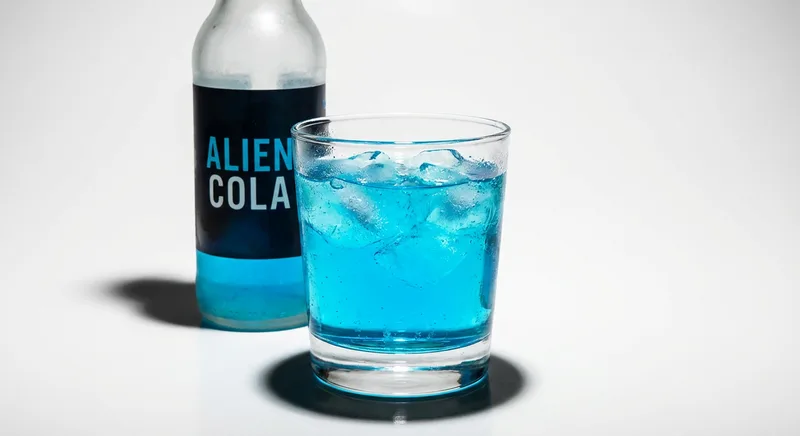
Crystal Pepsi taught the world that clear cola doesn't work because cola is supposed to be brown. Pepsi absorbed this lesson, thought about it deeply, and in 2002 launched Pepsi Blue — a cola that was the wrong color in the other direction.
Not clear this time. Blue. Aggressively, fluorescently, undeniably blue. The color of Windex. The color of antifreeze. The color of a swimming pool chemical that has a skull on the label. Pepsi looked at the full spectrum of colors available for a soft drink and chose the one that most closely resembles products you store under the kitchen sink.
Pepsi Blue was a berry-flavored cola — a fusion of Pepsi's cola base with a "berry" flavor that tasted like someone had dissolved a blue Jolly Rancher in a glass of flat Pepsi. It was sweet in the way that makes your teeth feel nervous. It was blue in the way that makes your dentist feel nervous. It stained everything it touched — teeth, tongues, shirts, countertops — with a blue dye so aggressive it was essentially a topical tattoo in beverage form.
The product launched to compete with Vanilla Coke, which was Coca-Cola's own 2002 flavor experiment. Vanilla Coke was brown — the correct color for cola — with a vanilla flavor that made intuitive sense. It succeeded. Pepsi Blue was blue — the wrong color for cola — with a berry flavor that made no sense. It lasted approximately one year before being discontinued in the U.S.
Pepsi's two attempts at non-brown cola — clear in 1992 and blue in 2002 — represent a decade-long experiment in proving that cola is brown. The control group (brown cola) has been selling for 130 years. The experimental groups (clear, blue) each lasted approximately one year. The data is conclusive. Cola is brown. Pepsi's R&D department is the most expensive way to confirm this.
The Vision: The Same Mistake, but Bluer
If Crystal Pepsi's problem was "clear cola confuses people," Pepsi Blue's problem was "blue cola alarms people." The progression from clear to blue suggests that Pepsi's product development team interpreted Crystal Pepsi's failure not as "cola shouldn't be non-brown" but as "cola shouldn't be CLEAR specifically — what about other non-brown colors?"
This is the logic of a person who touches a hot stove, gets burned, and concludes: "I shouldn't have used my LEFT hand. Let me try my RIGHT hand."
The berry flavor was meant to justify the blue color — berries are blue, therefore blue cola makes sense if the cola is berry-flavored. This logic has the same structural integrity as "fire trucks are red, therefore red food is fireproof." The association is cosmetic, not logical. Blueberries are blue. Berry-flavored cola does not need to be blue. Cherry cola is not red. Lemon soda is not yellow (usually). Grape soda is purple, but grape soda has never pretended to be cola.
The blue dye — Blue 1 (Brilliant Blue FCF) — was the subject of safety concerns, with some studies suggesting potential links to cancer at high doses. The dye is FDA-approved for food use, and the concentrations in Pepsi Blue were within legal limits. But the optics of a blue cola with cancer-dye concerns are approximately as bad as the optics of a blue cola generally, which are bad.
The Glorious User Experience
Chris from Tampa, FL — ★☆☆☆☆
"I drank Pepsi Blue and my tongue turned blue. Not subtly. BLUE. I looked in the mirror and my tongue was the color of a Smurf who had recently passed away. The dye stayed for approximately six hours, during which time I had a meeting, ate lunch with a coworker, and smiled at a stranger on the street — all with a tongue the color of a chemical spill. Nobody said anything. Everyone noticed. One star."
“Aggressively, fluorescently, undeniably blue”
Click to TweetAmber from Denver, CO — ★☆☆☆☆
"Pepsi Blue tasted like if regular Pepsi went to a rave and came back with a personality disorder. The berry flavor doesn't complement the cola — it competes with it. You're drinking two beverages simultaneously that don't want to be in the same glass. The cola says 'I am cola.' The berry says 'I am berry.' Neither wins. The consumer loses. One star."
Kevin from Chicago, IL — ★☆☆☆☆
"I spilled Pepsi Blue on a white shirt. The shirt is still blue. Not 'faintly tinted.' BLUE. Tide couldn't fix it. OxiClean couldn't fix it. The shirt has been rebranded as a 'blue shirt' because accepting the stain was less effort than removing it. Pepsi Blue's most lasting contribution to my life is a permanent wardrobe alteration. One star."
Nostalgia Reviewer, 2021 — ★★☆☆☆
"Pepsi brought Blue back for a limited run in 2021 and I tried it because nostalgia is a powerful drug that overrides taste memory. It tasted exactly as I remembered: blue. Not berry-blue. Not cola-blue. Just... blue. The color IS the flavor. When you drink Pepsi Blue, you taste what blue looks like. Two stars because the nostalgia lasted for three sips before reality caught up."
The Truth: Cola Is Brown and Pepsi Has the Receipts
Pepsi Blue is the second data point in Pepsi's inadvertent longitudinal study on cola color. Crystal Pepsi (1992): clear cola, failed. Pepsi Blue (2002): blue cola, failed. Regular Pepsi (1893-present): brown cola, 130+ years of success. The variable is color. The conclusion is obvious. The cost of confirming it was two failed products, millions in development and marketing, and a generation of blue-tongued Americans.
Vanilla Coke — the competitor Pepsi Blue was designed to fight — succeeded specifically because it didn't change the color. Brown cola with vanilla flavor. The same product in a different flavor, delivered in the same color consumers expected. Coca-Cola understood that cola's visual identity IS its identity. Pepsi understood this in 1992 with Crystal Pepsi and then forgot it by 2002 with Pepsi Blue, which is a learning curve with a dip in the middle.
Pepsi Blue was brought back briefly in 2021 as a nostalgia product, confirming what Crystal Pepsi's nostalgia revivals also confirmed: people want to try novelty colas, they don't want to drink novelty colas regularly, and the only sustainable cola color is brown.
The Verdict
Pepsi Blue is Pepsi's second failed attempt to prove that cola can be a color other than brown. Crystal Pepsi proved cola can't be clear. Pepsi Blue proved cola can't be blue. At this rate, Pepsi will release a green cola in 2032 and a purple cola in 2042, and by 2052 they will have systematically eliminated every color on the spectrum and arrived, finally, at brown.
Cola is brown. It has always been brown. It will always be brown. Pepsi's $100 million contribution to this knowledge could have been obtained by asking literally anyone.
We rate it 1 out of 5 brown colas.
What to Buy Instead
Tried-and-tested alternatives that actually deliver on their promises. We may earn a small commission on purchases.

Pepsi Wild Cherry
A Pepsi flavor variation that actually worked — and still exists. Brown. Cherry-flavored. No blue tongues. Proof that flavor can change without color changing.

Jarritos Tamarindo
Fun, colorful Mexican soda delivering both flavor AND novelty. Real sugar. Unique flavor. Doesn't pretend to be cola. Knows what it is.

Jones Soda Berry Lemonade
Berry soda that's honest about being berry soda — not cola pretending to be berry. Blue-ish. Real sugar. Still in business. The difference: it never claimed to be cola.
Comments
Sign in or create an account to join the discussion.