
Reebok EasyTone: The Shoes That Claimed 28% More Butt Strength and Cost Reebok $25 Million to Admit They Didn't
Skechers Shape-Ups had a classmate in detention — Reebok paid their own $25M FTC settlement for the same lies in different shoes
If you've read our review of Skechers Shape-Ups, you already know the toning shoe playbook: make shoes with unusual soles, claim they tone your body through the act of walking, get sued by the FTC, pay tens of millions of dollars, and continue selling shoes.
Reebok ran the same playbook, at the same time, for the same amount of money, with the same result. They just had a different logo on the box.
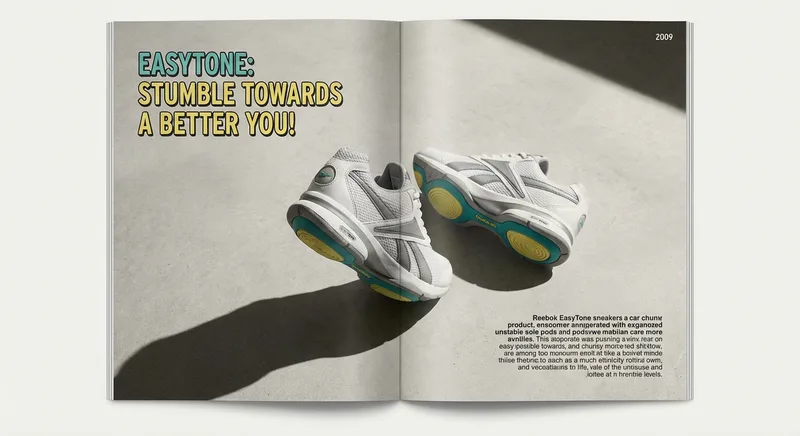
Reebok EasyTone shoes contained "balance pods" — small air-filled chambers built into the sole that created instability during walking. This instability, Reebok claimed, forced leg and butt muscles to work harder with every step. The ads were specific: "28% more strength and tone in the butt muscles." "11% more strength and tone in the hamstrings and calves." These weren't vague wellness claims. These were numerical, scientific-sounding assertions with percentages and muscle group specificity.
In 2011, the FTC determined that these claims were not substantiated by reliable scientific evidence. Reebok agreed to pay $25 million in consumer refunds. Twenty-five million dollars. For lying about shoes.
Skechers paid $40 million for the same thing a year later. Combined, the toning shoe industry cost its two biggest players $65 million in regulatory penalties. Sixty-five million dollars in fines for the collective assertion that walking in funny shoes would reshape your body — a claim that required consumers to believe that sole geometry could accomplish what diet, exercise, and genetics couldn't.
The Vision: Pods in Your Shoes, Tone in Your Butt
The EasyTone's "balance pod technology" sounded almost plausible. Air-filled pockets in the sole create a micro-instability effect. Your muscles respond to instability by activating stabilizer muscles to maintain balance. More muscle activation could, theoretically, lead to more tone.
The theory has one problem: the activation is so minimal that it produces no measurable body composition changes. Studies by the American Council on Exercise (ACE) found that toning shoes, including EasyTone, produced no statistically significant differences in muscle activation compared to regular athletic shoes during treadmill walking.
No. Statistically. Significant. Differences.
The 28% claim in Reebok's advertising did not come from an independent study. It came from Reebok-funded research that the FTC determined was not adequate to support the claims being made. This is the toning shoe industry's recurring theme: the only studies that support the claims are the ones paid for by the companies making the claims, and those studies don't survive independent replication.
The Glorious User Experience
Christine from Boston, MA — ★☆☆☆☆
"I wore EasyTones every day for five months. Walking to work. Walking the dog. Walking around Target on weekends. My butt looks identical. I took before-and-after photos. I showed them to my friend. She said, 'These are the same photo from two different angles.' They were not from two different angles. They were from five months apart. My butt did not receive the memo about the 28%. One star."
Deborah from Orlando, FL — ★☆☆☆☆
"The balance pods make the shoes feel slightly wobbly, like walking on a partially deflated bouncy castle. I didn't feel more toned. I felt less stable. I rolled my ankle on a curb — the same curb I'd walked over every day for three years without incident, because my previous shoes didn't have air pockets designed to make the ground feel unreliable. One star."
“Reebok EasyTone shoes contained "balance pods" — small air-filled chambers built into the sole that created instability during walking”
Click to TweetStephanie from Denver, CO — ★☆☆☆☆
"I received a refund check from the FTC settlement. It was for $4.37. My EasyTones cost $100. The math of consumer justice is: spend $100 on shoes that don't work, wait two years for the FTC to investigate, receive a check for $4.37, and use it to buy approximately one-third of a latte. The system works. Slowly. And not for you. One star."
Kevin from Portland, OR — ★☆☆☆☆
"My wife had EasyTones. I had Skechers Shape-Ups. We were the toning shoe household. Two people, two brands, zero results, and eventually two FTC settlement checks that together wouldn't cover a pizza. We framed the checks. They hang in our bathroom as a monument to our shared gullibility. One star."
The Truth: A $65 Million Industry Built on Air Pods
The toning shoe category, at its peak around 2010-2011, was generating over $1 billion in annual sales across all brands. Reebok, Skechers, MBT, and others were all selling variations of the same concept: shoes with modified soles that promised fitness through walking.
The American Council on Exercise's definitive 2010 study tested Reebok EasyTone, Skechers Shape-Ups, and MBT shoes against regular athletic shoes across multiple exercises. The conclusion was unambiguous: toning shoes did not produce significantly greater muscle activation, caloric burn, or fitness improvement compared to regular shoes.
Reebok's $25 million settlement and Skechers' $40 million settlement together represent the most expensive shoe-related regulatory action in FTC history. The settlements required both companies to stop making unsupported claims and to offer refunds to consumers who'd been misled.
The toning shoe market collapsed after the settlements. Sales dropped from over $1 billion to a fraction of that within two years. The shoes are still available — both Reebok and Skechers still sell versions with modified soles — but the fitness claims have been stripped. What remains is a slightly wobbly shoe with no promises and a regulatory history that reads like a cautionary tale about trusting percentages on shoe boxes.
The Verdict
Reebok EasyTone was the other half of the toning shoe fiasco — the $25 million co-defendant in the FTC's case against an industry that told women their shoes would reshape their bodies. The 28% claim was fabricated. The balance pods were theater. The only thing that got a workout was Reebok's legal department.
If you want to tone your legs, you need to exercise your legs. Not walk in wobbly shoes. Not stand in balance pods. Not trust advertisements with specific percentages that were made up by the company selling the shoes. Exercise. The boring, difficult, time-consuming kind that actually works and doesn't cost $25 million in FTC fines.
We rate it 1 out of 5 honest percentages.
If you want shoes that help you exercise by being good shoes — not by lying about physics — see our alternatives below.
---
✅What to Buy Instead
ASICS Gel-Nimbus 26
Actual running shoe with actual cushioning technology. Tones your legs by enabling you to run, which is how legs get toned. Revolutionary concept.
HOKA Bondi 8
Maximum-cushion shoe beloved by nurses, runners, and anyone who walks for a living. Comfortable because of engineering, not because of lies.
Allbirds Tree Runners
Comfortable, sustainable shoes with no fake fitness claims. They're shoes. They help you walk. That's the entire pitch. Refreshing honesty.
Comments
Sign in or create an account to join the discussion.